The Army Corrections Command
Professionalism, Justice, and Strategic Risk Mitigation
By Captain Joshua I. Bogle and Staff Sergeant Caitlin E. Sias
Article published on: September 15, 2025, in the Annual Issue of the Military Police
Journal Special Edition
Read Time: < 8 mins
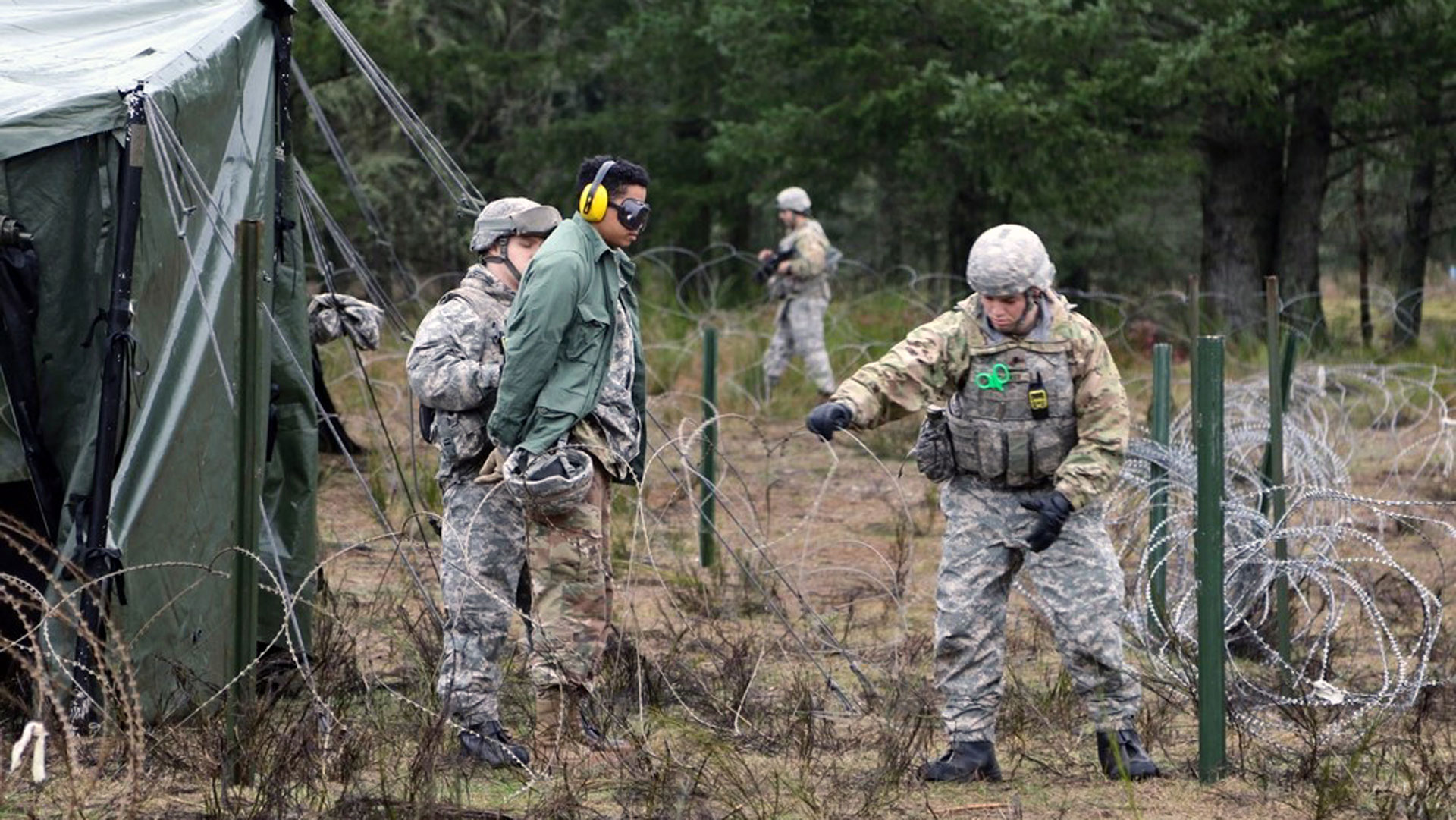
Detainee operations training
The contents of this article do not represent the official views of, nor are they endorsed by,
the U.S. Army, the Department of Defense, or the U.S. government.
Corrections and detention operations have been integral to the U.S. military since 1776,
during both peace and war. Headquarters, Department of the Army established the Army Corrections Command
(ACC) to exercise command and control over all Army correctional facilities. The ACC is responsible for
confining and rehabilitating military personnel convicted at courts-martial while ensuring discipline,
security, and the fair administration of justice within the military justice system. The Army Corrections
Brigade (ACB), Fort Leavenworth, Kansas, is the home of military corrections and represents the largest
subordinate unit of the ACC. The ACB maintains command and control of the United States Disciplinary
Barracks and the Midwest Joint Regional Correctional Facility, managing more than 685 inmates around the
clock.
The ACB exemplifies expertise in high-risk close confinement and contributes globally to correctional
practices. Military corrections enforce both federal and military laws under the Uniformed Code of Military
Justice (UCMJ),1 reflecting the
military’s commitment to recruit individuals of strong moral character and reform those who violate laws.
The ACB plays a vital role in the military justice system, ensuring that offenders face consequences while
being rehabilitated and deterred from reoffending.
The highly trained personnel of the ACB support commanders and their staffs in planning and executing
detention efforts across all military scenarios. The ACB provides advisors to U.S. Army National Guard and
Army Reserve units during mobilization and deployments. In conflict zones, correctional experts work with
allied forces to manage detainees from capture to detention facilities, freeing combat units from detainee
operations. Military police detention efforts aid stability by turning the challenge of interning combatants
into an opportunity for reintegration as informed, productive citizens.
Ultimately, the ACB mitigates strategic risk for the U.S. Army and the Department of Defense (DOD) by
providing correctional expertise in high-risk close confinement, serving as the culmination of the military
justice system and providing advice and assistance to support the active-duty component through detention
operations in large-scale combat operations.
Harnessing Talent and Experience in High-Risk Close Confinement
Military Occupational Specialty (MOS) 31E–Corrections and Detention Specialists undergo 7 weeks of Basic
Training and Advanced Individual Training before participating in further skill development at correctional
facilities. Upon assignment, they complete a rigorous, two-part training program: a week-long preservice
course and 5 days of immersive on-the-job training. These programs equip Soldiers with essential skills such
as security protocols, inmate management, and emergency response, fostering decision making and confidence.
The ACC excels in handling high-risk inmates in close confinement, such as those housed in the special
housing unit, where specialized skills are required. Soldiers selected for special housing unit duty
complete a multiphase training regimen, including a 2-day certification and on-the-job training focused on
operations, communication, and the identification of high-risk behaviors. This ensures that ACC personnel
are prepared to handle complex situations in demanding environments. Behavioral health staff further enhance
the capabilities of the ACC by addressing the psychological needs of inmates, managing those prone to
violence, and aiding their rehabilitation. These efforts support transitions from a special housing unit to
the general population, society, or military service.
Culminating the Military Justice System
Correctional facilities are crucial to the justice system, where sentences are enforced while offenders are
rehabilitated to reenter society. Corrections personnel follow court rulings, ensuring that punishment is
carried out and public safety is upheld.2 Correctional rehabilitation programs (such as education, job training,
and therapy) prepare inmates for successful reintegration into society, with the goal of reducing
recidivism. Parole hearings and sentence modifications involve corrections professionals, whose reports
influence decisions about release.
This commitment to rehabilitation and reintegration extends beyond the walls of confinement. If an offender
is granted supervision or parole, the Army Corrections System (ACS) continues to regularly monitor them upon
their release through electronic tracking, drug testing, and other methods. During this time, the ACS
coordinates with law enforcement agencies to assist in monitoring high-risk offenders and respond to
violations of parole conditions. Parole violators are reincarcerated to serve out the remainder of their
sentence along with any additional time imposed by the courts for reimprisonment offenses. To ensure that
inmates fulfill their confinement obligations, the inmate administrators within the ACC recalculate release
dates to account for lost good conduct time, earned time, or special acts of abatement.3
Linking Corrections and Detention Operations
Corrections and detention operations involve the confinement and management of individuals, but they differ
in their scope and legal foundations. The ACS focuses on safely and securely incarcerating and
rehabilitating U.S. military prisoners and protecting the community through deterrence.4 In contrast, military detention operations
typically occur within a warzone and involve individuals captured during combat or deemed a security threat.
These operations are governed by international law, including the Geneva Conventions, which dictate humane
treatment and the handling of detainees. Two relevant examples of U.S. military detention operations include
those at Andersonville Prison, also known as Camp Sumter, a Confederate prison camp during the American
Civil War located in Andersonville, Georgia, and at Abu Ghraib prison, a prison complex located 20 miles
west of Baghdad, Iraq, used during the Iraq War.
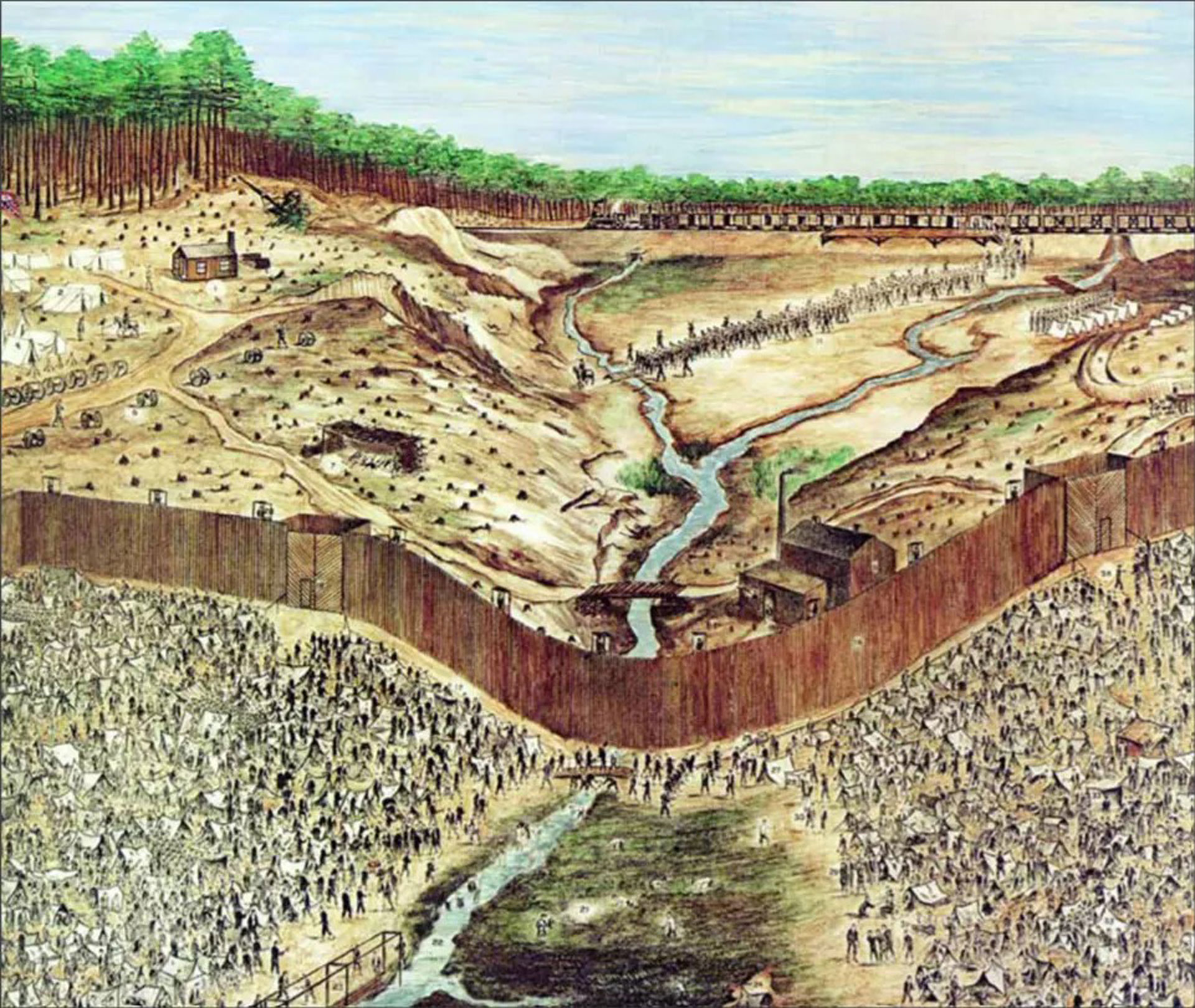
Andersonville Prison
Historical examples highlight the need for trained personnel and codified systems in detention. During the
Civil War, prisoners at Andersonville Prison suffered horrific conditions caused by an untrained guard
force, insufficient logistical support, and overcrowded facilities. Designed for 10,000 prisoners, it
swelled to over three times its capacity within 6 months, leading to disease outbreaks and malnutrition. By
the end of the war, more than 13,000 prisoners died from poor sanitation, overcrowding, exposure to disease,
freezing temperatures, and hunger.5
Operational challenges at Andersonville Prison were mirrored at Abu Ghraib after the 2003 U.S. invasion of
Iraq. Reports in November 2003 revealed multiple cases of abuse, including torture, sexual violence, and
detainee deaths caused by military police Soldiers from the 800th Military Police Brigade, Uniondale, New
York.6 Inadequate training in
prisoner handling procedures, a limited understanding of Geneva Convention provisions, and Soldier
quality-of-life issues—driven by logistical constraints of the broader conflict—produced an environment
conducive to prisoner abuse.7
These incidents underscore the critical role of trained correctional specialists in minimizing risks during
detainee operations.
As operations shift between counterinsurgency and large-scale combat operations, the United States must
address adversaries across space, cyberspace, air, maritime, and land domains in addition to the physical,
information, and human dimensions.8 Units must train to safeguard and transfer detainees as the
battlefield evolves. Large-scale combat operations pose sustainment challenges in securing resources for
construction materials, medical support, and mortuary affairs for temporary and permanent detainee
facilities, requiring innovative logistical solutions.
Detention operations support the operational tenets of agility, convergence, and endurance.9 Agility is achieved by quickly
collapsing and relocating detainee collection points to adapt to the evolving battlefield. Convergence
ensures that detainee operations synchronize with battlefield progress, advancing detainee collection points
alongside the forward line of troops to support combat by processing captured enemy detainees.
Mitigating Strategic Risk
Corrections operations are regulated by Army Regulation (AR) 190-4710 and Department of Defense Instruction Number
(DODI) 1325.07,11 which govern
the ACS. The ACS complies with the Prison Rape Elimination Act, of 2003, which establishes national
standards for prison rape prevention and response.12 Additionally, the ACS adheres to accreditation standards set forth
by the American Correctional Association. Per AR 190-47, the ACS protects communities by incarcerating U.S.
military prisoners; providing safe, secure environments; and fostering rehabilitation through programs,
administrative reviews, parole supervision, and sex offender registration.
The National Defense Strategy directs DOD efforts to mitigate strategic risks. Specifically, the 2022
National Defense Strategy emphasizes defending the homeland, deterring strategic attacks, and building a
resilient joint force.13 It
warns that internal issues can undermine mission cohesion and success.14 The ACB and ACC reduce strategic risk by
managing corrections and detention operations for the DOD.
Aligned with the National Defense Strategy priorities, the ACB continuously conducts corrections operations,
maintaining custody and discipline under the UCMJ. The ACC ensures safe and humane incarceration worldwide
while preparing prisoners for reintegration into society or the armed forces. These efforts uphold the law,
deter offenses, and protect national security by safeguarding sensitive information and preventing
radicalization in civilian prisons. Correctional facilities enhance force readiness by rehabilitating
prisoners to become productive citizens. The ACC also provides professional corrections experts to
commanders, ensuring humane detainee treatment on battlefields, reinforcing national values, and
strengthening public trust in the military.
In conclusion, skilled correction and detention professionals are essential to military corrections at home
and detainee operations abroad. As the final stage of the military justice system, the ACC plays a critical
role in deterring indiscipline and criminal activity. The expertise gained in ACC facilities, combined with
specialized training, enables Corrections Specialists to effectively advise commanders on detention
operations. As a result, the ACC reduces strategic risk and reinforces its relevance in the modern military
framework.
Endnotes
1. AR 27-10, Military Justice, 8 January 2025.
2. Doris L. MacKenzie, “From Theory to Policy:
Evidence-Based Corrections,” in Introduction to Criminal Justice: A Sociological Perspective,
2013, Stanford University Press, p. 5-6.
3. AR 190-47, The Army Corrections System, 17
March 2023, p. 53.
4. Ibid, p. 3.
5. “History of the Andersonville Prison,”
National Park Service website, <https://www.nps.gov/ande/learn/historyculture/camp_sumter_history.htm>,
accessed on 2 June 2025.
6. Thomas O’Dea, “Andersonville: Prisoner of War Camp,”
National Park Service website, <https://www.nps.gov/articles/andersonville-prisoner-of-war-camp-teaching-with-historic-places.htm>,
accessed on 2 June 2025.
7. Paul T. Bartone, “Lessons of Abu Ghraib:
Understanding and Preventing Prisoner Abuse in Military Operations,” Defense Horizons, 1
November 2008, p. 1-8.
8. Field Manual (FM) 3-0, Operations, 1
October 2022, p. X.
9. Ibid, p. 3-2.
10. AR 190-47, The Army Corrections System,
17 March 2023.
11. DODI 1325.07, Administration of Military
Correctional Facilities and Clemency and Parole Authority, 11 March 2023.
12. Prison Rape Elimination Act of 2003, Public Law
108-79, 108th Congress, 45 United States Code §§ 15601-15609, 2003.
13. United States Department of Defense, 2022
National Defense Strategy of the United States of America: Including the 2022 Nuclear Posture Review
and the 2022 Missile Defense Review, 2022, <https://apps.dtic.mil/sti/trecms/pdf/AD1183514.pdf>,
accessed on 9 June 2025.
14. Ibid.
Authors
Captain Bogle is the commander of Headquarters Company, Midwest Joint Regional
Correctional Facility Battalion (Corrections), Fort Leavenworth, Kansas. He holds a bachelor’s degree in
defense and strategic studies from the United States Military Academy, West Point, New York, and a
master’s degree in criminal justice administration from Columbia College, Missouri.
Staff Sergeant Sias is the battalion physical security inspector for Headquarters
Company, Midwest Joint Regional Correctional Facility Battalion (Corrections). She holds an associate’s
degree in liberal arts from Upper Iowa University, Fayette; a bachelor’s degree in project management
from The University of Arizona Global Campus: and a master’s degree in business administration from
Webster University.