From Hours to Minutes
Transforming Air Movement Planning in Army Aviation
By LTC Russ J. Nelson, Mr. Jake Stanfield, LTC Tyler J. Espinoza, Dr. Russell E. King, and
Dr. Brandon M. McConnell
Article published on: November 1, 2025 in the 2025 Fall Edition
Read Time: < 4 mins
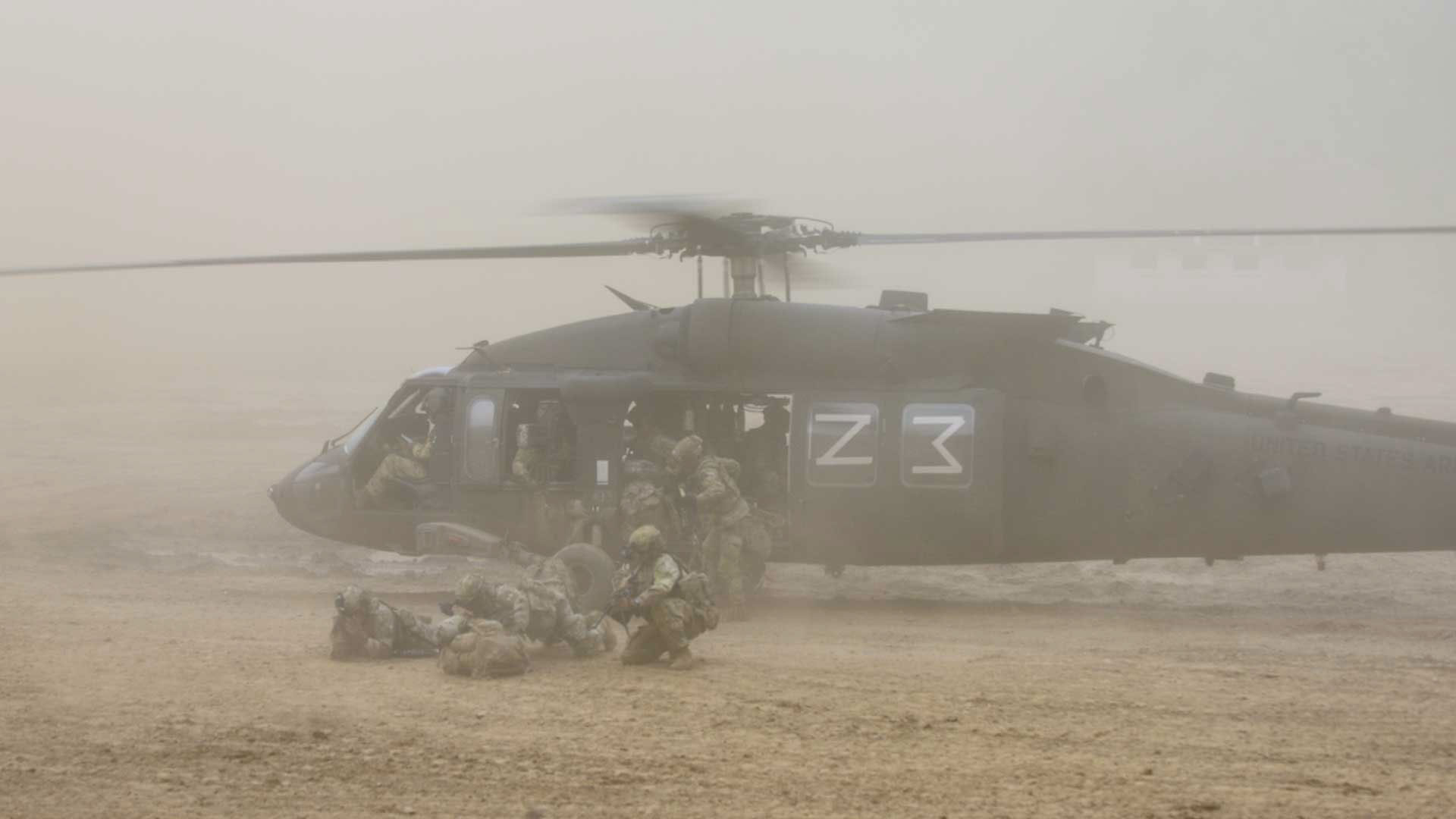
U.S. Army Soldiers conduct air assault operations in South Korea. U.S. Army photo by SGT
Alexander Knight.
Background: Army utility and cargo helicopters are crucial, yet limited, assets in the
execution of air assault and air movement missions. With effective and timely planning of such missions,
Army Aviation creates a significant tactical advantage over the enemy.
Air assault missions are characterized by their complexity and coordination; these maneuvers require a
massive collaborative effort involving various personnel, each providing a specific contribution toward
the mission’s success. Air movement operations represent the majority of combat aviation activities,
driven by the high demand from troops needing rapid movement across the battlefield. Furthermore, air
movement operations require agile planning that prevents the “all hands-on deck” mentality of air
assault missions. A proficient helicopter crew can arrive just hours before takeoff, receive their air
mission requests (AMRs) and routing from the aviation mission planners, complete the necessary
preparations, and execute the mission. Aviation mission planners work behind the scenes where the air
crew is usually unaware of the effort required.

Figure. Model’s inputs and outputs (Nelson et al., 2022).
Problem: Aviation mission planners' objectives are to rapidly develop effective
assignments of AMRs to helicopter teams and generate the best route for each aircraft. Air mission
request planning is a complex task that requires tracking each crew member’s flight time by hour and
mission type. Additionally, the planners must weigh mission priorities, allocate required activities to
available resources, verify available routes, and conduct feasibility checks on potential execution
schedules. The current process for aviation mission planners takes several hours to complete. This
process considers priority levels, locations, number of personnel, and pickup/drop-off time windows.
Time is a high priority, with rapid production of good plans yielding an operational advantage. Any
resource that could shift planner effort from plan construction to schedule evaluation and optimization
could yield better overall efficiency and quality of air movement operations.
Process: The Aviation Digest article by Nelson et al. (2022), “Army Aviation
Air Movement Automation for the Mission Planner,” proposed developing a user-friendly planning model
(Figure) to empower AMR planners to function more efficiently. U.S. Army researchers, in coordination
with academia, have completed a recent proof of concept that fulfills this initial vision. In
collaboration with military aviators, these researchers developed an algorithm designed to efficiently
assign AMRs to aviation teams and optimize their routing.
This system is built to empower human planners by enhancing their decision-making through interaction,
rather than replacing them. In its final form, the researchers envision planners uploading AMRs—in Excel
or other format—for preprocessing. The planning model will then output several courses of action (COAs)
that consist of AMRs’ assignment to helicopter teams, as well as helicopter team routing, ensuring fuel,
capacity, and time window limitations are not exceeded. Planners can then accept or augment COAs for
further improvement. The final assignment and routings will then output in a user-friendly format
compatible with aviation mission planning tools.
In the model’s current form, the following simplifying assumptions are made:
- Helicopter capacity is limited by passenger seats. Cargo weight and volume must be converted to
passenger equivalency.
- Each AMR has a single time window in which it is to be picked up from its pickup location and
delivered to its destination.
- An AMR is defined as a set of passengers with a shared pickup and drop off helicopter landing zone
(HLZ), time window constraint, and priority level.
- Service time (ground delay) is a function of the HLZ and includes time to refuel at HLZs with fuel
services.
| Number of AMRs |
Number of Helicopter (UH-60) Teams |
Number of HLZs (total) |
Number of HLZs with fuel |
Average Solution Time |
| 100 |
10 teams |
10 |
5 of 10 |
20 minutes |
Table. Model performance summary (Nelson et al., 2025b).
The model has the capability to shorten plan construction from many hours to just a few minutes. This
capability provides many benefits, enabling the planners to take system output and blend it into the
desired execution schedule. Users provide mission specifications, enabling the system to use established
assignment and routing methods to produce an initial solution. The air movement-specific techniques are
then applied to search for improved plans.
Real-world considerations include multiple refuel nodes, minimization of unsupported demand by priority
level, AMR time windows, aircraft team time windows/maximum duration, and passenger ride time limits.
The inputs can be grouped into AMR Demand, Area of Operations (HLZ Network), and Aircraft Availability.
The system balances three commander priorities: maximizing supported AMRs, minimizing aircraft
utilization, and minimizing total flight time. These priorities can be tuned up or down as needed. The
model can generate multiple viable options, allowing AMR planners to use this output to plan better air
movement missions more rapidly.

The 2-82 Assault Helicopter Battalion participates in a mission brief ahead of an air
assault mission. U.S. Army photo by CPT Shervon Pope.
Performance: This system has been tested and improved to reduce computation time and
provide multiple COAs based on adjustable parameters. A developed experimental design process can
optimize these parameters for a given environment.
The system was tested in high-density (urban) and low-density (rural) environments. In HLZ-dense
environments, it provided superior AMR support. In areas with fewer HLZs, the utilization of high-cost
helicopter teams (e.g., standby or reserve helicopter teams) was reduced. These improvements help
preserve scarce Army Aviation maintenance personnel and resources while enhancing the support provided
to the units involved. As shown in the Table, the system processed scenarios with 100 AMR requests and
gave feasible AMR assignment and team routing solutions in an average of 22 minutes.
The system is flexible and can be adjusted to accommodate bulk assignments for an aircraft fleet, helping
to minimize the helicopter teams needed. Overall, the versatility and efficiency of this system enable
both resource allocation optimization and support effectiveness assistance for military operations
across diverse environments.
Future Steps: The methodology and proof of concept algorithm is now available for Army
Aviation to consider and pursue for future development, including potential integration with aviation
planning tools (e.g., FalconView). 1 Having funded this research, the U.S. Army already owns the
intellectual property for this model. For more information regarding the model, reference Nelson et al.
(2023; 2025a).
The planning model can have an immediate impact by reducing time planning, providing route generation,
and maximizing resources. Ultimately, the successful integration of these systems can revolutionize air
movement operations, ensuring that Army Aviation can deliver timely and practical support to troops when
needed.
References
National Geospatial-Intelligence Agency. (n.d.). FalconView. https://www.nga.mil/resources/FalconView.html
Nelson, R., Espinoza, T., & McConnell, B.M. (2022). Army aviation air movement automation for the
mission planner. Aviation Digest, 10(1), 38–39. https://www.lib.ncsu.edu/resolver/1840.20/39678
Nelson, R., King, R., McConnell, B. M., & Thoney-Barletta, K. (2023). US Army aviation air movement
operations assignment, utilization and routing. Journal of Defense Analytics and Logistics,
7(1), 2–28. https://doi.org/10.1108/JDAL-11-2022-0013
Nelson, R., Werner, J., Daniels, R., King, R.E., McConnell, B. M., & Thoney-Barletta, K. (2025a).
Air movement operations planning heuristic improvement. Journal of Defense Analytics and
Logistics, published online ahead of print. https://doi.org/10.1108/JDAL-02-2024-0003
Nelson, R., Stanfield, J., Espinoza, T., King, R., & McConnell, B.M. (2025b). Model performance
summary.
Notes
1. “FalconView is a Windows mapping system that
displays various types of maps and geographically referenced overlays” (National
Geospatial-Intelligence Agency, n.d.).
Authors
Dr. Thomas Bruscino is a historian and professor in the Department of Military
Strategy, Planning, and Operations at the U.S. Army War College. He holds a PhD from Ohio University
and is an author most recently of The Future of the Joint Warfighting Headquarters: An Alternative
Approach to the Joint Task Force (Strategic Studies Institute and the U.S. Army War College Press,
2022). He is writing a book on the American Expeditionary Forces in the Meuse-Argonne Campaign.
Dr. Mitchell G. Klingenberg is a historian and assistant professor in the
Department of Military History at the U.S. Army Command and General Staff College. He holds a PhD
from Texas Christian University and is the author most recently of Americans and the Dragon: Lessons
in Coalition Warfighting from the Boxer Uprising (Strategic Studies Institute and the U.S. Army War
College Press, 2023). He is writing a book on the life and U.S. Army career of John Fulton Reynolds.