Support Operations in an ABCT
Maintenance and Mobility with the Hercules and LET
By MAJ John Paulson
Article published on: December 1, 2025 in the Armor Winter
2025 issue
Read Time:
< 10 mins
Armored brigade combat teams require constant heavy lift support for
sustainment and recovery operations. The division sustainment brigade’s
heavy and medium truck companies are designed to support the movement of 96
tracked vehicles in one series for onward movement in or out of theater. The
Support Operations Office must prioritize the truck companies’ support for
two to three brigades, their deployments, and maintenance requirements.
Heavy and medium truck companies cannot support smaller ad hoc missions at
the battalion level. Commercial line haul (CLH) assets are contracted for
smaller movements to support movement needs. These contracts can be costly
and require two to four weeks of planning, depending on the distance, road
system, and payload.
At the brigade level, the forward support company and headquarters and
headquarters company in each battalion have organic assets that, if trained
and planned properly, readily address support requirements within the
brigade while easing the burden on division assets. In 4-10 CAV, 3rd ABCT, 4
ID, the Cavalry Squadron realized lessons learned during its training cycle
and rotation to Poland in support of Operation European Assure, Deter and
Reinforce 2024. Utilizing its organic M88A3s and Light Equipment Transporter
(LET), the squadron completed two unique mission sets moving containerized
equipment and tracked vehicles without external support.
Maintenance planning estimates must retain options and address
shortfalls.
1
During the squadron’s 24-02 training rotation at the National Training
Center (NTC), the squadron was spread across all three corridors
simultaneously. The squadron identified risk in its operations outpacing its
sustainment plan, with three of six M88A3s non-mission capable. The Iron
Brigade coordinated fourteen Heavy Equipment Transporter (HET) collection
points to keep squadron recovery assets forward while using
brigade-resourced HETs for larger movements.

Figure 1. A U.S. Army Light Equipment Transport Vehicle assigned to 1st
Battalion, 64th Armor Regiment, 3rd Infantry Division, pulls a D7R Dozer
during Marne Focus at Fort Stewart, Georgia, April 7, 2024. (U.S. Army
photo by PFC Santiago Lepper)
With several light track deadlines, the squadron still faced a resource
shortfall in moving the light track fleet from the point of recovery to the
unit maintenance collection point. Given the tow capacity and gross weight
of the M984, the squadron prioritized wheeled Wrecker support to recover
M113 and M1068 variants. This enabled priority of M88A3 support to the M1A2
and M2A3 fleets. A heavy reliance on the M88A3 continued through NTC and
into the United States European Command (USEUCOM) deployment.
In March 2024, 4-10 CAV deployed to Logistics Support Area (LSA) South,
Poland, with a concrete slab motorpool near the Mielno Range Complex. This
motorpool did not provide any overhead cover or lift, and the squadron
relied on organic lift assets between forward repair systems (FRS), M88A3s,
and its Heavy Expanded Mobility Tactical Trucks (HEMTT) with a crane for
light tracks and decks. While this left a major reliance on the M88A3 for
services and unscheduled repairs, the maintainers received training
opportunities to improve their competency in using platform-based hoists. In
a unique case, the squadron received a short-notice task to support
containerized equipment loading onto LETs. The problem set entailed four
fully loaded 20-foot containers near LSA South set for transport the next
day. Due to the distance and maintenance issues, a 30k forklift was not
feasible to complete the task. The container weights exceeded the 23,283
lbs. limit for the Enhanced Container Handling Unit (E-CHU), but were well
within the M88A3’s 64,000lbs ‘pick and carry’ capacity (Figure 3).
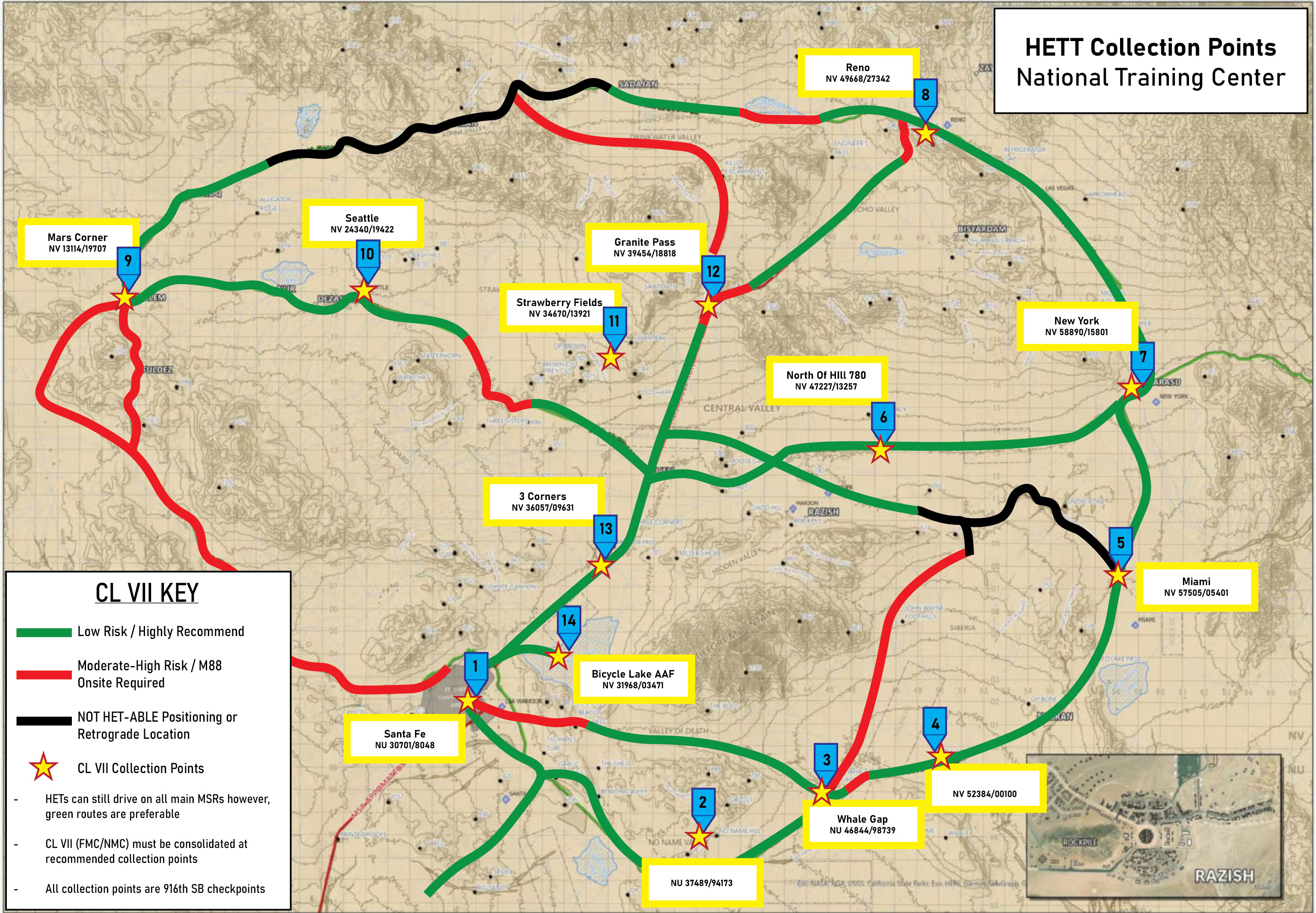
Figure 2: Recovery Concept for NTC 24-02 (U.S. Army graphic)
The squadron completed the mission with zero deficiencies through its H9,
H8, and hazardous materials (HAZMAT) certified support and recovery team and
88Ms. Proper knowledge of rigging and pre-equipment inspections ensured a
safe and controlled mission for personnel and equipment.
2
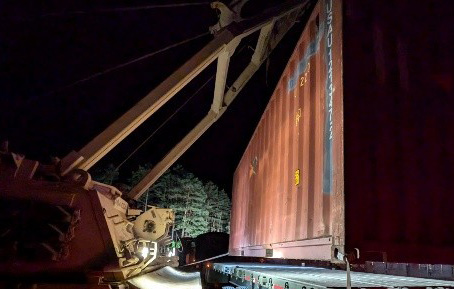
Figure 3: M88A3 loading a container onto a trailer. Note the safety guide
ca-bles on the lower corners. (Photo by author)
During redeployment from USEUCOM, 4-10 CAV controlled the port node in
Bremerhaven, Germany, from October to January. Maintenance was vital to
support the fleet, given the unique redeployment schedule over five vessels
and the freezing weather. Port authorities denied ‘heavy maintenance’ or
repairs involving petroleum, lubricants, and oil. The squadron procured a
maintenance pad at LSA Garlstedt with the assistance of the German Army,
21st Theater Sustainment Command (21 TSC), and 1 CD. The Port of Bremerhaven
is 37 minutes or 24 miles from LSA Garlstedt on city roads and the autobahn.
During initial planning, 21 TSC sourced CLH trucks to move eight tracked
vehicles. This planning required weeks to coordinate with German
transportation authorities to confirm routes and deconflict local
construction and traffic. Over the four months at port, more tracked
vehicles required evacuation to LSA Garlstedt for heavy maintenance. The
squadron could not predict or aggregate all movement requests to synchronize
the movement and maintenance plans. The staff and Master Driver found a
practical solution to reduce cost and time through the brigade’s organic
LETs.
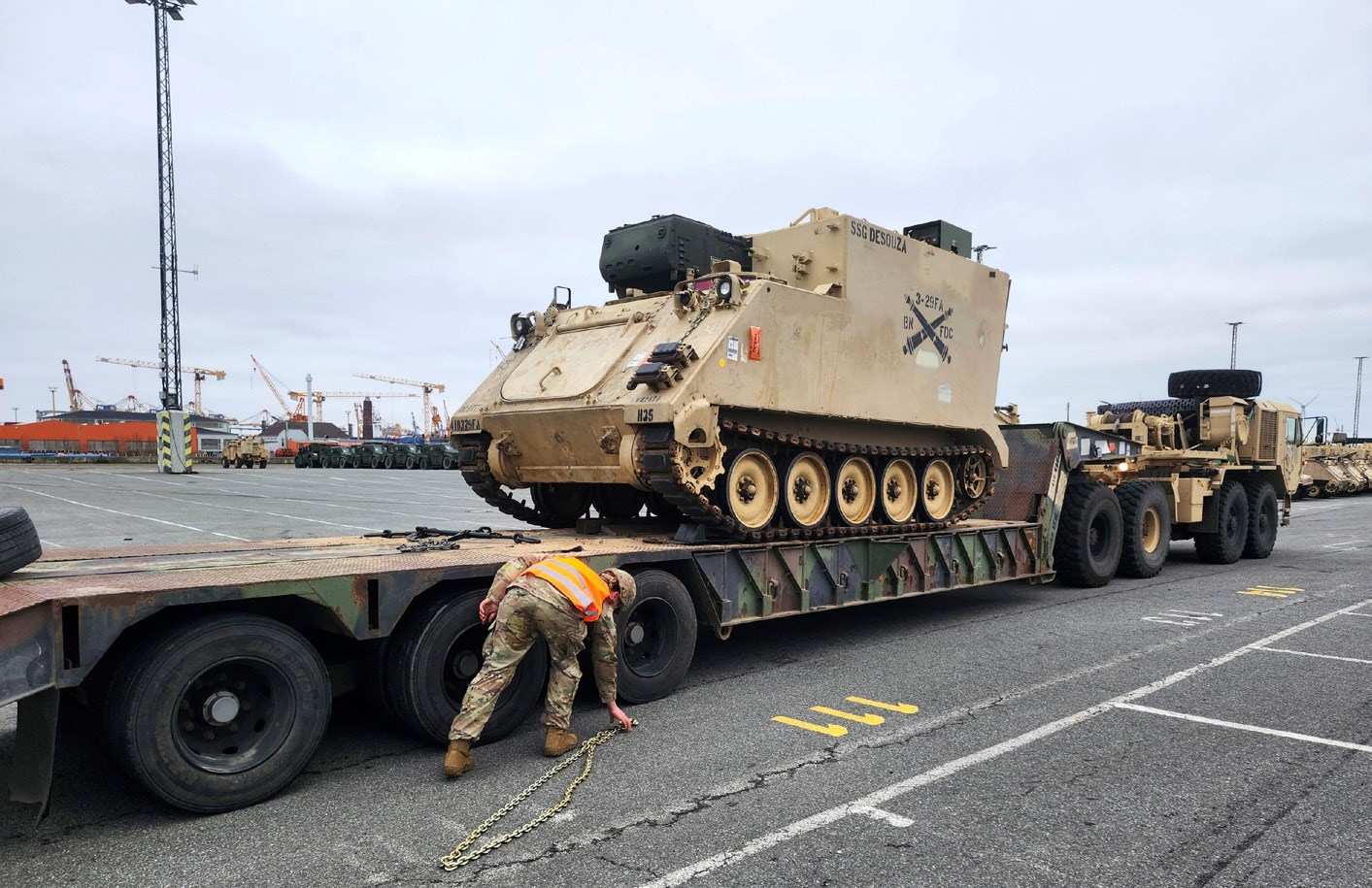
Figure 4: A 91H chains an M1068 to a LET. (Photo by author)
An additional six light tracks required transportation to LSA Garlstedt for
heavy maintenance. Using brigade organic capabilities reduced financial and
timing demands on the unit. The staff coordinated monthly March Credits
through 21 TSC for an approved challenges and trains operators to meet the
demands of future missions will enhance a unit’s effectiveness.
Notes
Author
Major John Paulson is an Armor Officer currently serving
as an ATGM Threat Analyst for the Defense Intelligence Agency/Missile and
Space Intelligence Center (MSIC) at Redstone Arsenal, Alabama. MAJ
Paulson’s key operational and command assignments include serving as the
Squadron Executive Officer for 4th Battalion, 10th Cavalry Regiment, 3rd
Armored Brigade Combat Team (ABCT), 4th Infantry Division at Fort Carson,
Colorado. MAJ Paulson commanded both the Headquarters and Headquarters
Company (HHC) and Bravo Company of the 1st Battalion, 35th Armored
Regiment, 2nd ABCT, 1st Armored Division at Fort Bliss, Texas. He is a
graduate of the Command and General Staff College (CGSC) and all levels of
professional military education for Armor Officers. MAJ Paulson earned a
bachelor’s of science in mechanical engineering from the United States
Military Academy and a master’s of science in mechanical engineering from
Purdue University.