The Multi-Purpose Company
Shaping the Future Battlefield through Innovation, Sensors, and Destruction
By CPT Patrick Nelson
Article published on: September 1, in the Fall 2025 Issue of the Infantry Journal
Read Time: < 20 mins

Figure 1 — 2/101 MBCT Task Organization
The Maxim machine gun was first introduced to significant combat by the U.S. Army during World War I. In 1912, each regiment received four of these machine guns, believing this quantity would be suitable. By 1919, however, the number of Maxims in each regiment had increased to 336. The machine gun proved to be a combat multiplier that changed the history of warfare. Like the introduction of the machine gun, the multi-purpose company’s (MPC’s) capabilities in sensing and targeting the enemy will also have a sizeable impact on our next battlefield and must not be undervalued. The MPC is beginning to field and test unique capabilities that can change the way the U.S. Army fights, leading with sensors and electronic warfare capabilities to defeat our adversaries in future conflicts.
In February 2024, the 2nd Brigade Combat Team, 101st Airborne Division (Air Assault) transitioned into a mobile brigade combat team (MBCT) as part of the Army’s Transformation in Contact (TIC) initiative. The MBCT construct consists of three infantry battalions with three organic rifle companies, a headquarters company, and an MPC. When required, enabler battalions such as the field artillery battalion, brigade support battalion, and brigade engineer battalion are then attached to the MBCT from their new respective division headquarters, while the cavalry squadron was deactivated.
The 1st Battalion, 502nd Infantry Regiment, 2/101 MBCT, first activated its MPC (Wardog Company) on 1 March 2024, consolidating historical headquarters and headquarters company (HHC) assets into the company while also standing up a new dismounted anti-tank (AT) platoon and robotics and autonomous systems (RAS) platoon. Wardog Company was task-organized the same as the other two infantry battalions in the MBCT, but we had the freedom to adjust how we fight and manage specific rolling stock within the RAS platoon and AT platoon. We approached this from a mobile, light, and flexible formation containing Infantry Squad Vehicles (ISVs) for mobility and High Mobility Multipurpose Wheeled Vehicles (HMMWVs) for command and control. During several collective field exercises, we developed tactics, techniques, and procedures (TTPs) on how we could synchronize multiple warfighting functions to communicate the reconnaissance picture while preserving the force and accomplishing the mission. Collaboration with the other MPCs in 2/101 MBCT was crucial to developing sound TTPs and sharing lessons learned. Wardog Company found our purpose as defining the enemy composition and disposition on the battlefield, disrupting adversary collection efforts, and when applicable, destroying high-payoff targets through direct and indirect fire.
The MPC currently includes:
- The scout platoon consists of three reconnaissance teams and one sniper section. It specializes in area, route, and counter reconnaissance with small unmanned aerial systems (sUAS) and ISVs. To avoid being compromised by aerial observation prior to ground observation, the platoon leads with sensors before scouts establish a surveillance site, reducing risk to the force. The scout platoon currently has two sUAS with a projected gain of four more systems once the RAS platoon receives medium-range reconnaissance (MRR) and long-range reconnaissance (LRR) drones in the near future.
- The mortar platoon consists of four 81mm squads with a Fire Direction Center (FDC) and headquarters section. The incorporation of purely 81mm mortars allows the platoon to stay mobile with a smaller footprint, moving mortar firing positions consistently to avoid visual contact and counter-battery to provide accurate and timely fires. The removal of 120mm mortars and their respective trailers allows increased flexibility to air assault a greater minimum force of 81mm squads with a hybrid ISV and HMMWV fleet. The incorporation of the mortar platoon into the MPC expedites the platoon’s ability to process fire missions since they are synchronized with the MPC’s common operating picture while the mortar platoon leader is monitoring reconnaissance reports. The battalion commander still holds tactical authority of the mortar platoon, and the MPC headquarters retains an administrative relationship in tactical operations.
- The RAS platoon consists of two UAS sections with each prioritizing named areas of interest (NAIs) and target areas of interest (TAIs) by distance and capability. The first section has medium-range UAS systems to collect priority information requirements (PIRs) and conduct observation handoff with the long-range UAS section that can then target through payloads or as switchblade operators. Both sections have the capabilities to harvest electronic signatures using Raspberry Pi devices that are programmed to detect enemy Wi-Fi and Bluetooth signatures. The platoon also has the capability to employ emitters that produce a simulated signature to disrupt the enemy’s collection capability. The platoon is currently operating purely with sUAS with an artificial intelligence (AI) object detection capability. It is projected to receive MRR and LRR UAS, which will increase the platoon’s flight range, endurance, and targeting capability.
- The AT platoon consists of three sections, each with a blend of short, medium, and long-range AT weapons that can use mobile ISVs to reach a vehicle drop-off (VDO) site, cache their ISVs, and occupy an attack by fire to destroy high-payoff targets observed by the scout platoon or RAS platoon. The AT platoon can assist in isolating, disrupting, and blocking key terrain and routes to enable maneuver companies’ freedom of maneuver prior to the probable line of contact. The platoon has the flexibility to detach sections when additional anti-tank combat power is required to maneuver companies.
How the MPC, 1-502 IN Fights
1-502 IN adjusted from the historical employment of specialty platoons with the battalion headquarters by empowering the MPC command team to control the scout, RAS, and AT platoons. The battalion commander maintained the authority for employment and firing of the mortar platoon while the MPC command team tactically employed, coordinated, and reported the other platoons in the fight. This span of control worked effectively, allowing the battalion headquarters to control additional attachments and the three rifle companies by delegating the reconnaissance fight to the MPC headquarters. This enabled the MPC headquarters to consolidate reconnaissance reports and coordinate up and out throughout the chain of command.
A major advantage of this command relationship is the cross-coordination that naturally occurs between adjacent units. While the MPC informs higher headquarters, it also seamlessly promotes collaboration from voice and digital communications between adjacent unit headquarters regarding detailed terrain and enemy analysis of their objective. This allows a maneuver commander to request and receive assistance on advantageous terrain and enemy arrayment from the scout and RAS platoons while the AT platoon isolates key terrain or destroys high-payoff targets.
After answering PIRs or responding to deliberate reconnaissance reporting criteria, the MPC disseminated reconnaissance reports directly through operations and intelligence nets. With several reconnaissance assets sending reports, having a company headquarters consolidate this information created a clear, shared understanding. The MPC command team could effectively communicate accurate situation reports and enemy activity, which mitigated the battalion headquarters from receiving independent situation reports that varied in accuracy and timeliness from the specialty platoons. At times, the platoons submitted redundant reports while observing the same NAIs or TAIs, but assigning a company command post to battle track allowed for sound recommendations and shared understanding to move forward instead of incomplete and piecemeal reconnaissance reports.
Wardog Company employs the scout and RAS platoons from surveillance sites and launch sites to remain ready to cue and/or mix assets in several NAIs. The redundancy of reconnaissance assets is crucial to the MPC’s success; observing a PIR from multiple observation platforms and angles provides the clearest picture of the enemy situation to adjacent and higher headquarters. The AT platoon remains in isolation positions to deny an avenue of approach and be in position in the vicinity of a reconnaissance section to move to a high-payoff target to engage, depending on engagement criteria.

Figure 2 — Multi-Purpose Company Task Organization
The MPC focuses on executing three key tasks in support of the main effort: route reconnaissance, area reconnaissance, and counter-reconnaissance. The following vignettes Figure 2 — Multi-Purpose Company Task Organization Fall 2025 INFANTRY 23 highlight the MPC’s success as part of a combined team to answer critical PIRs while conducting counter-reconnaissance.
Joint Readiness Training Center (JRTC) 24-10 Route Reconnaissance
During JRTC 24-10, Wardog Company was tasked on the afternoon of 21 August 2024 to conduct route reconnaissance west of Route Iridium. The purpose was to identify a bypass route so that all maneuver companies could pass undetected to the northwest to posture them in vicinity of the Shughart Gordon attack. After hasty troop leading procedures, we identified that the AT platoon would support the scout and RAS platoons during route reconnaissance by isolating key terrain along the reconnoitered routes. The RAS and scout platoons consistently led with sensors (sUAS) before moving ground reconnaissance assets on routes. They moved their ISVs to a concealed cache site in a position of relative advantage to reconnoiter likely enemy positions. The AT platoon made visual and then direct contact with a mounted reconnaissance platoon (minus) at about 1700 that day. It successfully destroyed the opposing force’s (Geronimo’s) wheeled reconnaissance assets and neutralized enough combat power to force the withdrawal of reconnaissance forces back to the north. A large part of this success was due to the continued observation of Geronimo reconnaissance forces’ counter-reaction with sUAS and reconnaissance teams.
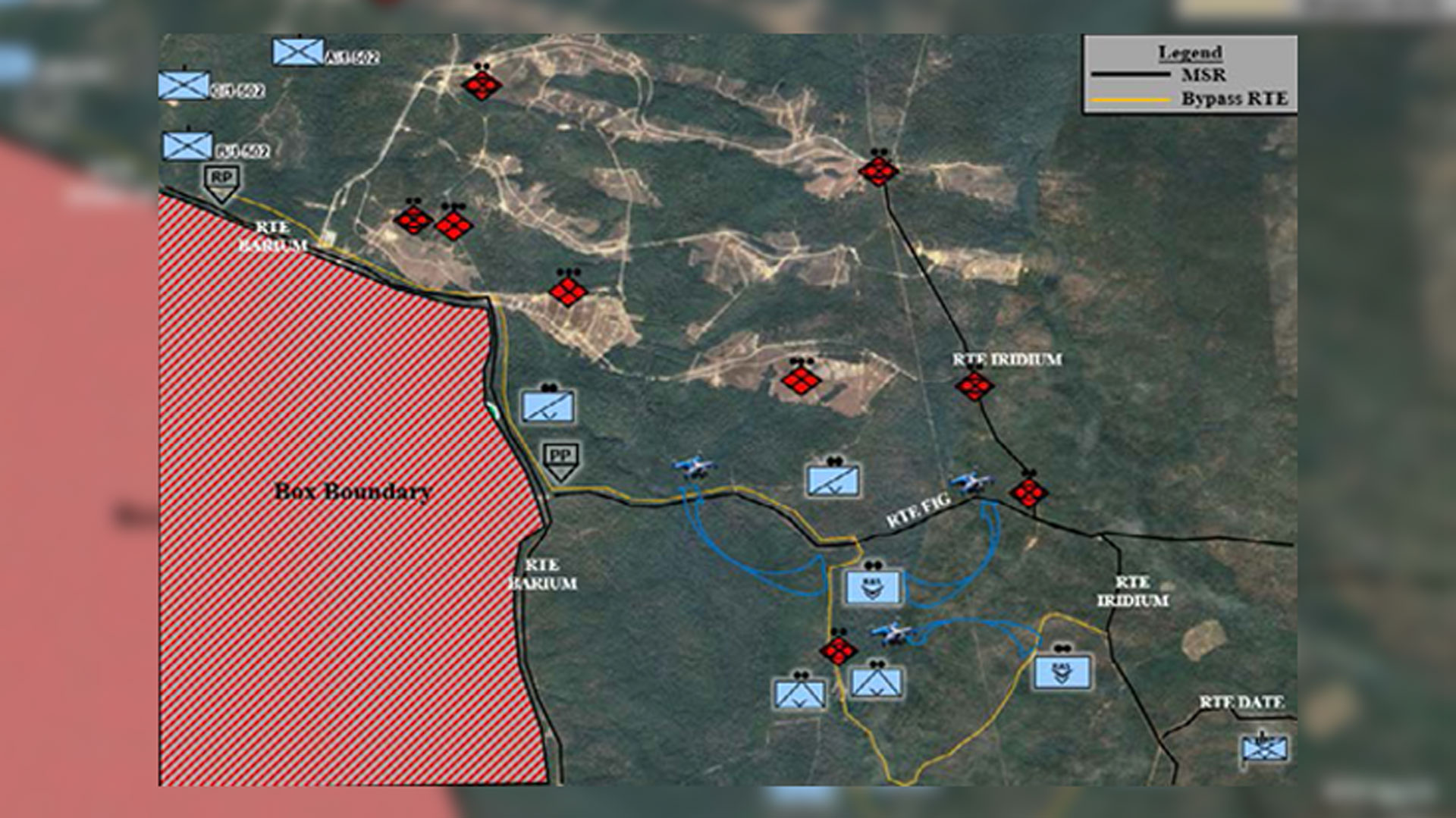
Figure 3 — JRTC 24-10 Route Reconnaissance
Wardog Company continued to conduct successful bounding with sUAS, covering mounted avenues of approach to trigger the scout platoon to reconnoiter terrain trafficable for the maneuver companies. After nearly 13 hours of conducting deliberate route reconnaissance, Wardog identified a mobility corridor that supported light wheeled vehicles moving in a column formation (ISVs and HMMWVs). The seamless reporting as the MPC conducted deliberate reconnaissance allowed adjacent and higher headquarters to remain informed on the status of the route that differentiated from the planned route. The command relationship with the MPC effectively allowed the battalion headquarters to simultaneously produce digital graphics for the maneuver companies while the MPC headquarters maintained voice communications with the rifle company headquarters to provide detailed information regarding the route. This allowed Wardog Company to guide all three maneuver companies through the passage and release points while isolating key terrain with the AT platoon. The interoperability of the scout, RAS, and AT platoons enabled an infantry battalion to bypass key Geronimo defensive positions and move approximately 7 kilometers to its patrol base while remaining undetected for future operations.
JRTC 24-10 Hasty Counter-Reconnaissance Mission
On the morning of 18 August, 1-502 IN transitioned to defensive operations after seizing a low water crossing. Wardog Company with the scout and RAS platoons executed area reconnaissance to the west to develop the situation and identify Geronimo’s course of action while the AT platoon began engagement area development to the east. On or about 0500, a scout platoon reconnaissance team identified one BMP-2 along an unimproved trail (Route Elderberry), denying freedom of maneuver to conduct sustainment operations.

Figure 4 — JRTC 24-10 Hasty Counter-Reconnaissance Mission
Unable to prosecute a fire mission due to engagement criteria, one AT section deployed to destroy the BMP-2 by moving to a concealed VDO site and conducting a dismounted movement. The reconnaissance team deployed sUAS to continue observation on the target, relaying to the AT section the arrayment and location of the BMP-2 after a near-side link up. This resulted in the AT section successfully destroying one BMP-2 with a Carl Gustaf flank shot. Wardog Company deployed the “hunter-killer” concept several times throughout the rotation, destroying multiple wheeled and track vehicles without being decisively engaged by conducting a reconnaissance and battlefield handover from the scout and RAS platoons to the AT platoon. This example of hasty counter- reconnaissance highlights the efficiency gained by having the MPC headquarters control these platoons. The teams executed deliberate area reconnaissance in coordination with the AT section while the MPC headquarters simultaneously sent situation reports to the battalion headquarters. This provided the commander with the decision space to allocate appropriate resources to neutralize or destroy the BMP-2 and allowed platoon leadership to prioritize tactical employment of their sections. At the same time the reconnaissance report was sent, the MPC headquarters deliberately informed an adjacent rifle company in the vicinity (Bulldog Company) that the route was not open to use for sustainment. This cross-coordination between multiple echelons allowed the battalion headquarters to conduct simultaneous execution with minimal wasted time.
Unique Capabilities and Initiatives of the MPC
Wardog Company, in coordination with the 2/101 MBCT’s other two MPCs, developed innovative ways to influence the battlefield. Among the highlights are the Raspberry Pi and sUAS AI object detection software.
What is a Raspberry Pi?
The Raspberry Pi is a small computer that can be programmed to have multiple functions. The two primary employment techniques used by Wardog Company since the start of transition in contact are to emit Wi-Fi and Bluetooth signals or to detect a Bluetooth and W-Fi signal. You can also use a Raspberry Pi to detect signals — called harvesting — by attaching it to a drone. This allows the drone operator to pull enemy Wi-Fi or Bluetooth locations with the naming convention of their devices.
AI Object Detection using Raspberry Pis
Prior to JRTC 24-10, the RAS platoon installed a trial AI object detection software on the Raspberry Pi devices that were mounted on their sUAS. This allowed the platoon to identify and maintain observation of high-payoff targets that were not visually observed by the drone operator’s control station. We tested this capability on 20 August as the RAS platoon was collecting on a NAI along a high-speed avenue of approach. The AI software positively identified several Geronimo vehicles before the Wardog drone operator had visual contact. The identification of both these vehicles resulted the destruction of one BMP-2 and one GAZ Tiger through indirect fires.
Lessons Learned
With the implementation of significant sUAS systems among multiple platoons, clear concise reconnaissance guidance proved critical for the scout, RAS, and even AT platoon to differentiate priorities in the reconnaissance fight. Despite sUAS being able to sense the enemy situation before ground reconnaissance assets can observe it, the requirement for humans to establish hidden surveillance sites has not changed. The RAS platoon detected and observed wheeled and tracked vehicles, general enemy disposition, and locations of significant tactical obstacles effectively.
The scout platoon offers a more refined analysis than what sUAS can observe. Ground reconnaissance teams can efficiently provide maneuver companies with target refinement, arrayment of the enemies’ composition and disposition, bypass routes and arrayment of obstacles, and terrain analysis. Reconnaissance teams excel in recommending routes, support-by-fire positions, and assault positions to maneuver company commanders.
A significant lesson learned over the past several months is to refine the AT platoon’s task and purpose to incorporate their assets in counter-reconnaissance missions, isolating key terrain and disrupting the enemy beyond the battalion’s frontline trace. One of the platoon’s shortfalls, however, is its lack of suppression capabilities during these missions. With the current construct, the platoon doesn’t have lightweight suppression capabilities but will be augmented with medium machine guns in the short term. In restrictive terrain, the Carl Gustaf proved to be the most casualty-producing weapon for the AT platoon, largely due to the minimum standoff required to employ the weapon system. The platoon’s requirement to maintain Javelins has not changed, but we recommend each section is provided two Carl Gustafs to operate in restrictive terrain when open lines of sight are not feasible to employ Javelins.
Why the MPC Has a Future in Infantry Battalions
The Russia-Ukraine War has proven that incorporating new, innovative ways of finding, fixing, and finishing the enemy is essential to accomplishing the mission. The MPC provides an infantry battalion with organic capabilities to shape the battlefield before maneuver elements cross the probable line of deployment. The ability to sense, gain a situational understanding of the enemy, and attrit combat power through agile AT sections and indirect fire enables higher headquarters decision space.
The MPC provides an organic asset in the infantry battalion that not only can shape the battlefield for its battalion headquarters but throughout the whole brigade. I can confidently say when our nation calls upon the 2nd Mobile Brigade Combat Team to fight and win our nation’s wars, the Multi- Purpose Company will pragmatically shape the battlefield.
Author
CPT Patrick Nelson served as the commander of the Multi-Purpose Company, 1st Battalion, 502nd Infantry Regiment, 2nd Mobile Brigade Combat Team, 101st Airborne Division (Air Assault), Fort Campbell, KY.