Unveiling the Significance of the Army's Training with Industry Program
The Training with Industry Program and Why It Is Important to the Army
By Capt. James DiCarlo
Article published on: June 1, 2024 in the Army Sustainment Summer 2024 Issue
Read Time: 10 mins
Transformation in contact requires today’s Soldiers to adapt to the advancements of technology and to modernize to maintain dominance against peer competitors. The Army’s Training with Industries (TWI) program is a unique broadening opportunity that enhances a Soldier’s knowledge of corporate capabilities and methods within their occupational specialty. The corporate Soldier advances the Army’s readiness efforts of transforming in contact to meet the demands of a multidomain battlefield and move at the speed of technology. This unique opportunity provides engagement with cutting-edge innovation within the civilian sector while enhancing your warfighters’ skills in leadership, management, and specialized corporate knowledge The program provides a holistic learning experience for Soldiers who serve as fellows for leadership roles in an evolving and dynamic military environment at the operational and strategic levels. Program fellows learn how industry supports military requirements and addresses critical gaps while cultivating a well-rounded, adaptable, and forward thinking leader.
The Army’s TWI program dates to the mid-1970s and was established to provide selected officers with the opportunity to gain valuable experience and exposure to civilian industry practices. In the 1980s, the Army analyzed corporate practices for answers to innovation questions and building solutions to materiel issues and processes. These processes included decision-making tools, risk management, just-in-time logistics concepts, incorporating artificial intelligence, automation of warehousing, and using data analytics. The insights from this analysis assisted in Army development and innovation. The program was so successful that NCO and warrant officer programs were developed in the late 1990s and early 2000s.
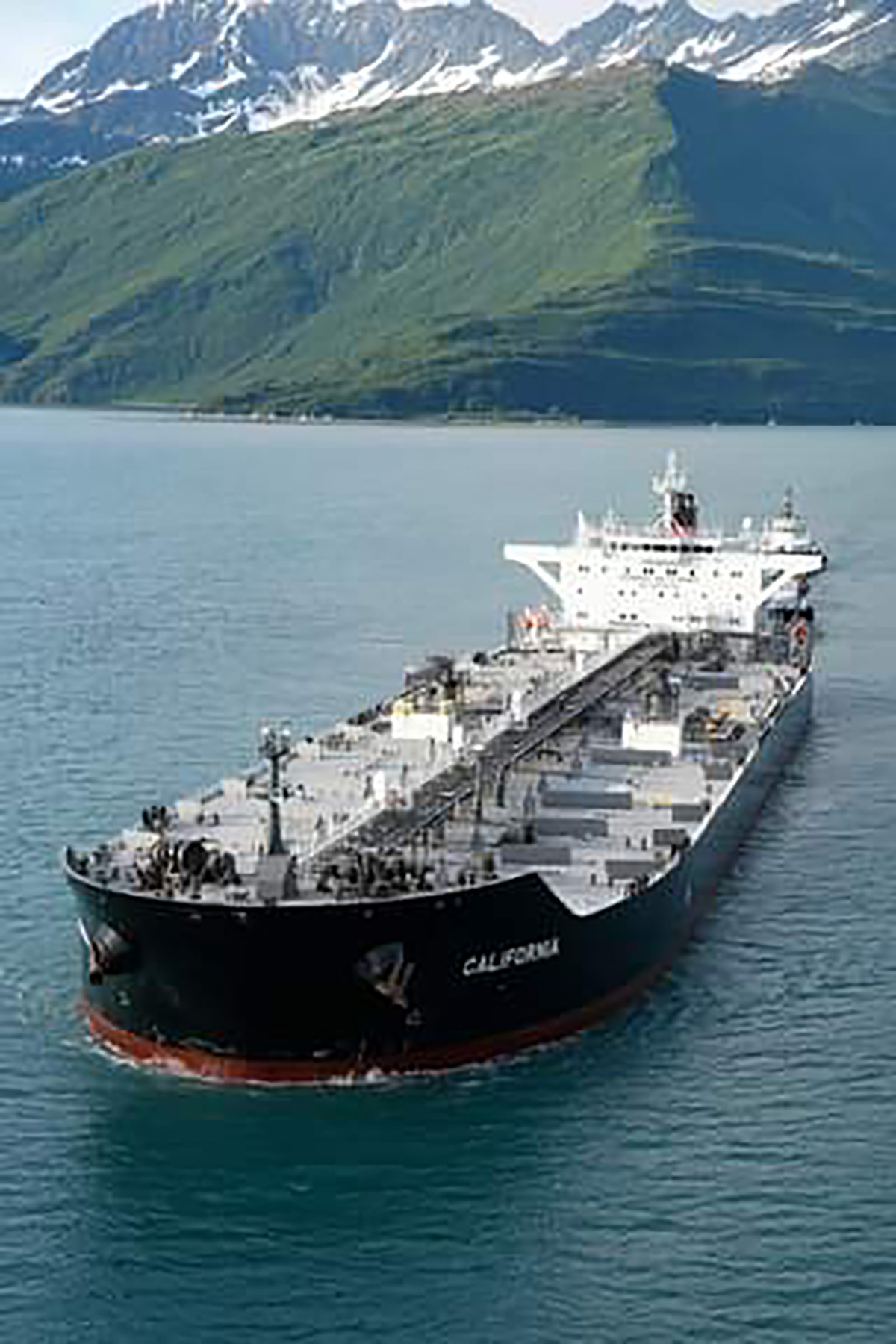
Crowley tanker MT California transports petroleum from Alaska to refineries on the West Coast, May 20, 2021. (Photo by Judy Patrick)
Today, the program continues to adapt to meet the evolving needs of the Army, serving as a vital component of officer professional development. It offers a unique amalgamation of civilian and military experiences, thereby enhancing the overall readiness and effectiveness of Army leadership.
Maximizing Success: The Mutual Benefits of the Army, Industry, and the Fellow
The industry gets access to some of the Army’s most talented young officers. The TWI fellows bring unique perspectives and leadership abilities. Also, the industry partners benefit from the exchange of knowledge when fellows reintegrate into the civilian workforce, introducing new ideas and approaches. Lastly, hosting TWI fellows demonstrates a company’s commitment to supporting the military community and can enhance its reputation as a responsible employer.
Officers benefit significantly from exposure to industry best practices in petroleum distribution, storage, innovation, and technical development, thereby expanding their knowledge beyond traditional military training. Specialized training opportunities with the host company and during utilization assignments could lead to courses such as the Petroleum and Water Officer Course, enabling the officer to pursue energy solutions relevant to their career aspirations and ultimately bring added value to the force. Additionally, this program gives officers the chance to explore career paths outside the military, enhancing their leadership versatility and adaptive skills for diverse environments.
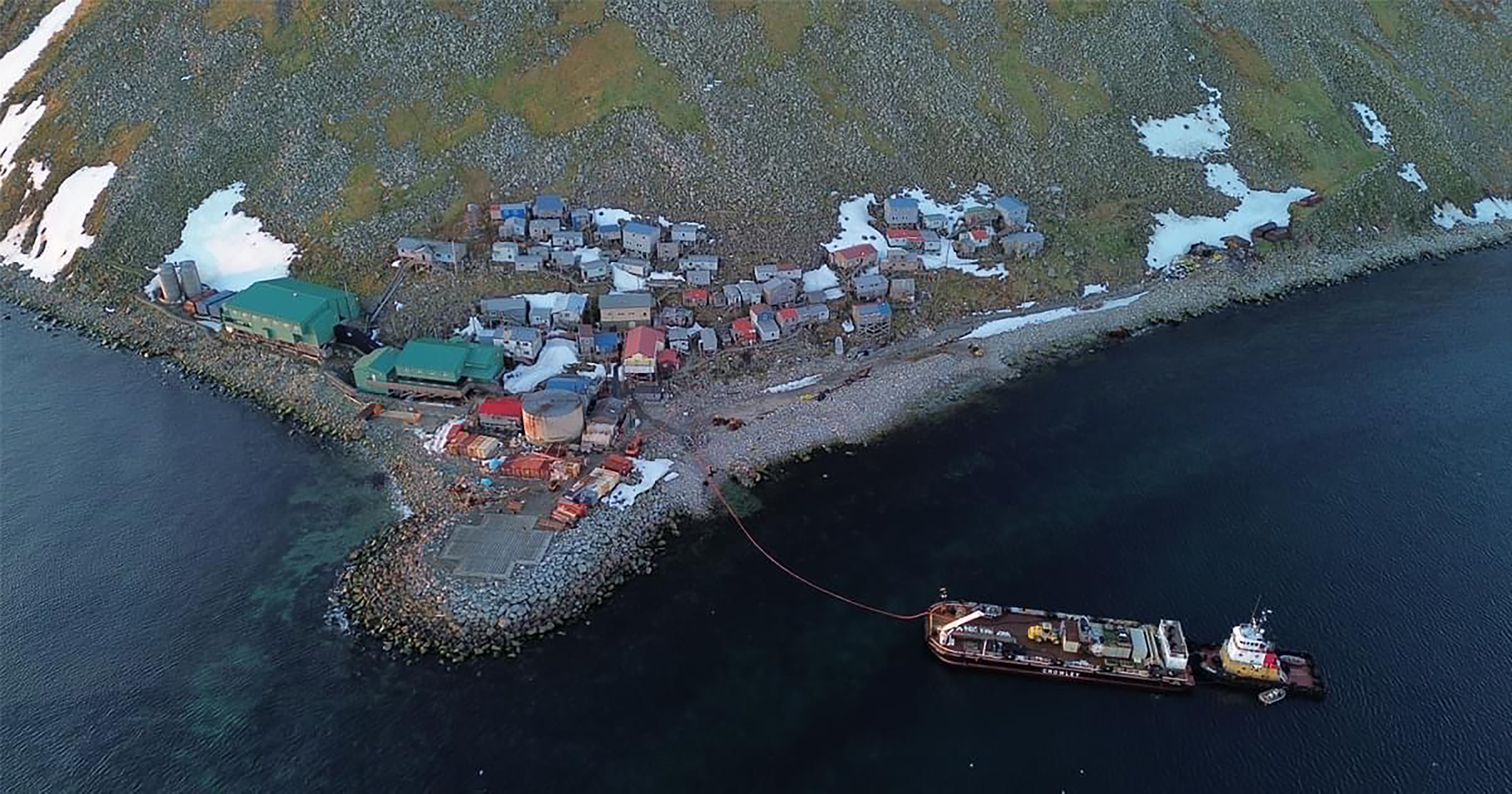
Crowley orchestrates one of the nation’s most complex fuel delivery systems at Little Diomede Island in the Bering Strait between Alaska and Siberia, an example of Crowley’s strategic equipment placement. (Photo by Spencer Proctor)
The Army benefits from this program by enriching officers’ career development through skill enhancement in petroleum distribution, storage, and logistics over-the-shore operations in the U.S. Indo-Pacific Command and Arctic areas. Furthermore, officers can bring back technology and best practices, including data analytics and machine learning, to keep the Army abreast of advancements. The program also provides a unique opportunity for officers to develop leadership skills in civilian contexts, thus enhancing their effectiveness as leaders. Participation in this program facilitates the establishment of valuable networks and connections with industry professionals, fostering collaboration and potential partnerships that can benefit the Army across various domains.
The Program with Crowley Maritime
In 2021, I was honored to be appointed as the TWI fellow at Crowley Maritime in Anchorage, Alaska. This opportunity allowed me to delve into petroleum maritime operations, gaining insights into their role in supporting future Army requirements. The experience provided invaluable exposure to commercial industry practices, including joint logistics over-the-shore (JLOTS), at-sea replenishment, and collaboration with inter-service agencies worldwide.
I acquired extensive knowledge and experience in petroleum operations during my tenure at one of the leading petroleum distribution companies in the Pacific region. Additionally, I served as a project manager at Crowley, where I gained valuable experience in procurement, planning, and execution of global operations, including supplying over 58 million gallons of fuel to the DoD.
Upon joining Crowley, I participated in an onboarding process that involved meetings with the company’s vice president and a program director. During these discussions, we outlined learning objectives and assessed my skill set. Before my arrival, mutually agreed-upon learning objectives were established between the Army and Crowley, focusing on areas such as over-the-shore delivery methods and commercial JLOTS operations conducted by Crowley in the Bering Sea and across the Pacific. Furthermore, my learning objectives included gaining insights into inter-service engagements and observing Crowley’s conduct of at-sea replenishment operations. Within this scope, Crowley provided exposure to industry innovations, particularly in aircraft refueling, barge concepts, and floating storage capabilities.
Transitioning from my role as a post command logistics officer in a Stryker brigade to working at the defense fuel support point (DFSP) in the port of Anchorage exposed me to the significant scale of daily fuel operations and transactions. Managed by Crowley as a contractor-owned and contractor-operated facility, the DFSP provides 40 million gallons of aviation turbine fuel storage to the U.S. Defense Logistics Agency (DLA) Energy in support of nearby military operations at Joint Base Elmendorf Richardson. This experience provided valuable insights into corporate structures and the requisites for successfully securing and managing profitable contracts and a comprehensive understanding of Crowley’s fuel management systems, technology, and procedures.
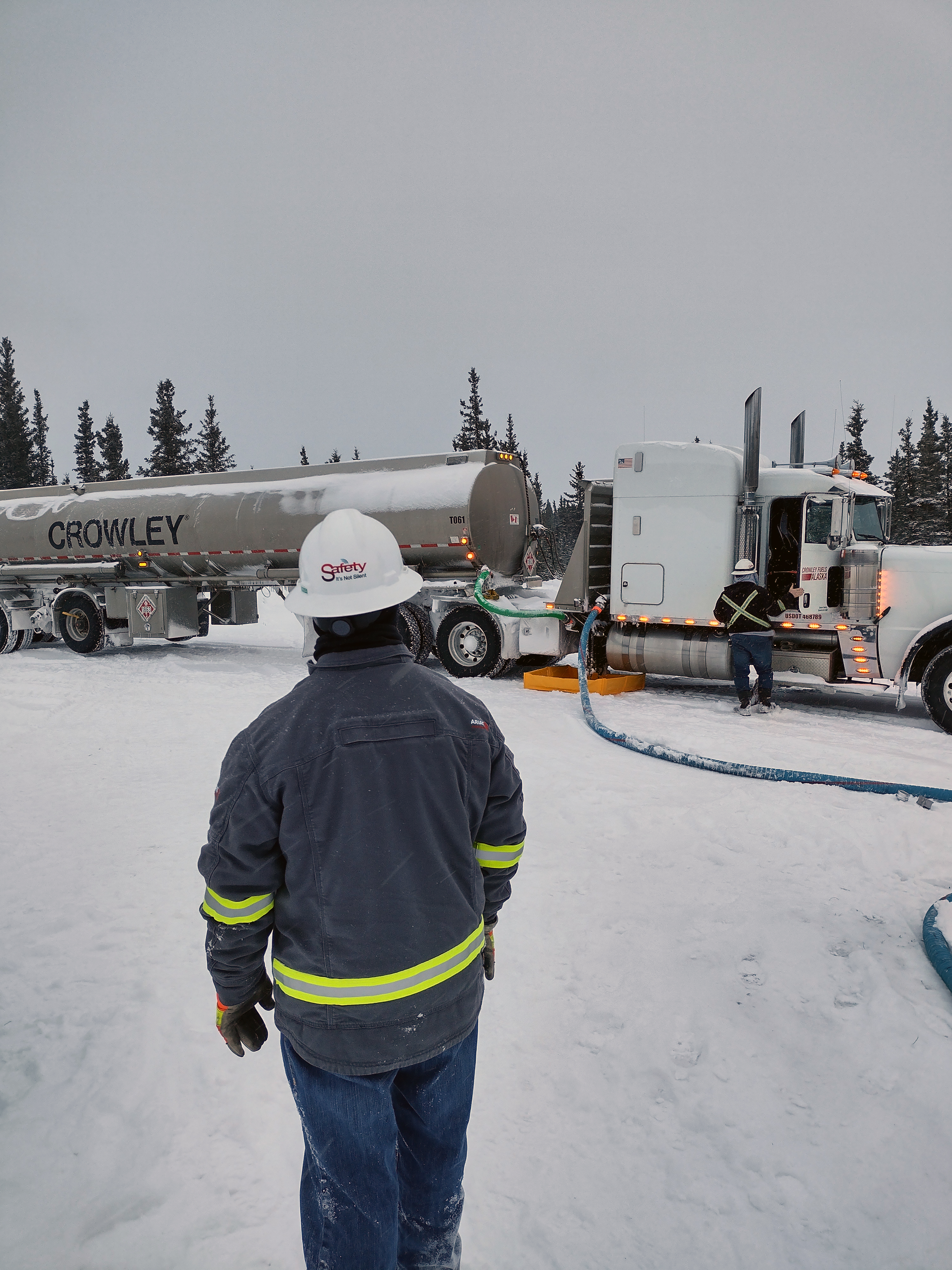
Capt. James Dicarlo supervises a fuel delivery from a Crowley tanker truck at Joint Pacific Multinational Readiness Center(Photo by Wesley Revel)
Furthering my understanding, I visited a newly established Crowley bulk fuel storage facility located in the interior of Alaska. The facility provides 21 million gallons of aviation turbine fuel storage for DLA Energy in support of Eielson Air Force Base and Fort Wainwright. This visit provided insights into pipeline operations, the construction of tank truck loading facilities, and the operations of railcar loading facilities.
I enjoyed going to Valdez, Alaska, to see how ocean-going tankers receive crude oil from the Trans-Alaska Pipeline. I then sailed on a Crowley Maritime crude oil tanker, the MT California, from Valdez to Long Beach, California, to see how Crowley Maritime conducts Pacific Coast bulk crude oil deliveries. The MT California is 251 meters long, 44 meters wide, and crewed by 21 Crowley Maritime workers. It has a maximum storage capacity of 36.2 million gallons of crude oil split across the 12 internal tanks. I was impressed by the loading of 700,000 barrels (29.4 million gallons) of crude oil from the Trans-Alaska Pipeline within a 22-hour window. All the while, 2 feet of snow fell on the ground and did not affect operations.
Furthermore, I observed a partial discharge of crude oil at El Segundo, California, at one of the few multi-point mooring terminals on the West Coast. These specialized terminals facilitate vessel discharge and/or cargo reception from the shoreline while maintaining a distance of up to 1 mile from the coast. During cargo transfer operations at such terminals, a vapor barge is used to capture fuel vapors generated in the process. Our discharge operation, which involved 12.6 million gallons of crude oil, took approximately 10 hours to complete, culminating in its delivery to the onshore refinery.
Crowley secured a multi-year contract from the U.S. Department of Energy to establish and manage a DFSP in Darwin, Australia, for the Australian Defense Force during my tenure in their technical workforce initiative program. The initiative, known as Project Camus, aimed to construct a 50-million-gallon fuel support facility catering to aviation-grade JP-5 and commercial Jet A-1 fuel products. Additionally, the facility was designed to accommodate vessel support, tank truck loading operations, and on-site fuel additization. This experience provided me with valuable insights into developing business plans and devising solutions tailored to military requirements.
International Challenges
In the petroleum industry, I gained insights into the formidable challenges encountered by U.S.-based companies involved in the transportation, storage, and distribution of petroleum products across Europe and the Pacific, in contrast to their operations within the U.S. One primary hurdle arises from the disparities in regulations and standards governing the oil and gas sector. In Europe, adherence to a multitude of European Union regulations is imperative, characterized by their rigorous and intricate nature compared to the comparatively simpler U.S. standards. Navigating this diverse regulatory landscape demands significant time and resources while ensuring profitability remains intact.
Europe’s geopolitical landscape comprises 44 countries, each with its own unique political and economic dynamics. Negotiating these geopolitical intricacies and fostering relationships with numerous governments pose considerable challenges compared to the centralized governance structure within the U.S. Additionally, European nations often prioritize environmental conservation and sustainable practices, necessitating U.S. companies to adapt their operations and technologies to meet stringent European environmental standards. Consequently, this introduces an additional layer of complexity to their operations.
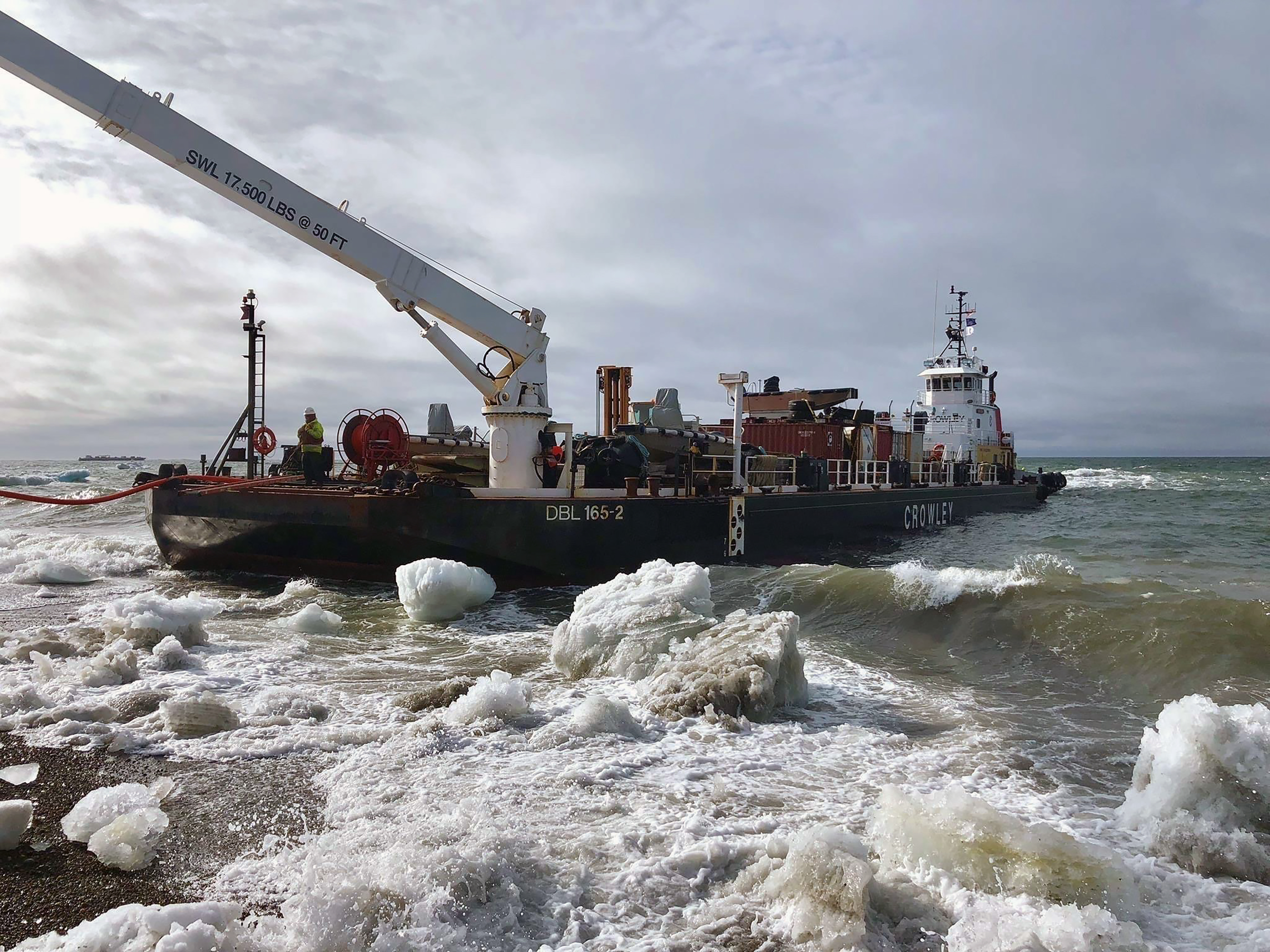
tugboat Sesok and barge DBL 165-2 deliver heating oil to Utqiagvik (Barrow), Alaska, via beach landing. (Photo by Patrick Burns)
Taxation presents a notable challenge, because tariff structures vary across Europe, significantly impacting the cost of conducting business. For U.S. companies operating in multiple European jurisdictions, understanding and adhering to diverse tax laws and tariffs pose a complex task. Additionally, the petroleum industry in Europe boasts well-established local entities, which may pose stiff competition for U.S. companies. Adapting to this competitive landscape and establishing market share present significant complexities.
Summary
Through my extensive tenure at Crowley Maritime, participation in the TWI program has facilitated a diverse array of skill enhancements. These include opportunities for networking, cross-pollination of ideas, familiarity with civilian practices, honing decision-making abilities, adeptness in technology integration, promoting innovation, and fostering mutual understanding between the industry and the U.S. military. Civilian sectors serve as pioneers in technological advancements, enabling us to assimilate and tailor their latest innovations to military applications.
Moreover, the TWI program affords invaluable insights into the operational challenges encountered by corporations on both national and international scales, while simultaneously fostering a deeper comprehension of the military’s distinctive needs among civilians. The enduring impact of TWI manifests itself in returning Army personnel who are equipped with enhanced skills, knowledge, and perspectives that significantly bolster the overall efficacy and modernization of the Army.
Author
Capt. James “Jimmy” DiCarlo serves as the deputy director of the Petroleum and Water Department at Fort Gregg-Adams, Virginia. He is a 2015 graduate of Eastern Kentucky University, where he received his commission as a second lieutenant in the Quartermaster Corps. He will be finishing his master’s degree in the summer of 2024 from the Florida Institute of Technology. He served as the first fellow in the Training with Industries program with Crowley Maritime in 2021-2022. His military education includes the Quartermaster Basic Officer Leader Course, the Logistics Captains Career Course, and the Petroleum and Water Officers Course.