Deputy Commandant’s Corner - Mentorship Part 4
By CW5 Stephen Napoli, Deputy Commandant, USAWOCC
Article published on: January 1st 2025, in the Volume III, Issue 1, January-March 2025 Edition of Strength in Knowledge: The Warrant Officer Journal
Read Time: < 5 mins
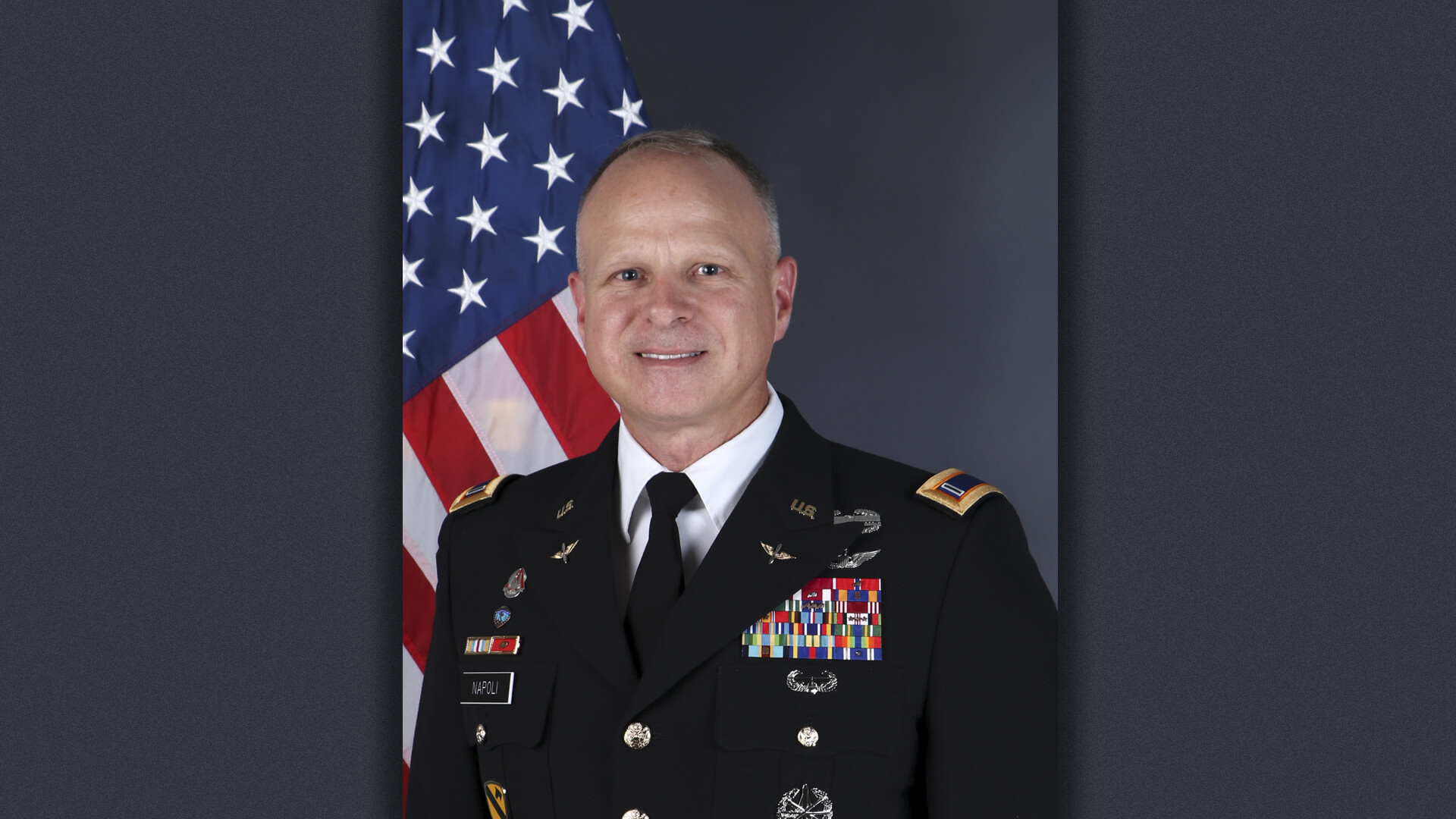
CW5 Stephen Napoli, Deputy Commandant, USAWOCC
This quarter, we continue with the series of mentorship articles developed from an old warrant officer’s perspective and experience. You will find that there is an overlap between mentorship and leadership through the series. As a reminder, the CARE Model was born from my poor answer to a good question about success. We should be so well-versed at being Credible, Approachable, & Relevant Everyday (CARE) that it is natural to apply its value to our lives. We all know people that are stellar at one component, but weak at the others. Of course, it is easier to preach it and teach it than it is to live it sometimes.
We have laid the foundation of mentorship in previous articles in Strength in Knowledge. Last time we addressed “Credibility.” That is only one key ingredient to the CARE Model. It does not do much for your mentorship journey be only credible in your role. If we are not approachable, it does not really matter how credible you are. How many times have we referred to someone as “the smartest and most dedicated (perhaps credible) person?” Then (wait for it) . . . BUT . . . “you cannot have a reasonable conversation (or another synonymous phrase)” with that person. I learned that lesson early in my aviation career. There was a talented instructor pilot that I went to with what I thought was a simple aviation-related question. Instead of an answer, I almost received a “no-notice” evaluation. I was dismayed that I, as an aviator, could not ask another aviator a question. As he put it, “I would be depriving you of an opportunity to learn the same way I learned.” What I learned that day was that if I have a question, DO NOT go to that particular instructor pilot. He was more than credible in the profession; however, he was not approachable. In turn, I found him to be less relevant in my professional (and personal) growth.
Good mentors that are unapproachable do not exist. What does it even mean to be approachable? ADP 6-22 tells us, “Army leaders are approachable when they encourage open, candid communications and observations. Approachable leaders show respect for others’ opinions, even if contrary or nondoctrinal. To be approachable, leaders remain objective when receiving bad news and encourage subordinates to be open and candid in their communication” (page 6-5). It has the same feel as a fusion of Army Values. Being approachable is more than announcing to the world that you are approachable. As mentors (or senior leaders) we do not determine for ourselves if we are approachable. Others that observe and interact with us determine if we are approachable. You cannot convince people you are approachable—you must show them. Being approachable also requires us to be accessible. But not everyone that is accessible is approachable. For myself, I tell others that I do NOT have an “open door policy.” What I do have is an open door, where everyone is welcome. If it is important enough for a visitor to interrupt what I am doing, then it is important enough for me to stop what I am doing and listen. Receptive leaders have people around them that are telling them the truth because they do not fear the outcome. Approachability allows us to develop appropriate relationships with others; therefore, it helps to build trust. ADP 6-22 tells us, “Unselfish, humble leaders set themselves apart as teammates who are approachable, trustworthy, and open to follower input and advice” (page 2-4).
The ability to simply listen goes a long way to being approachable. It is the one thing you can do without doing anything that can generate relief. Listeners do not always have to solve problems. Sometimes it is enough to listen. When action is required, we are better informed about the decisions to make when we listen. The Bible verse I have applied to my personal and professional lives has held me accountable to that promise to listen. James 1:19 says that we should be “quick to listen, slow to speak, and slow to become angry.” What a great order of events for leaders or mentors to follow. I even have that verse adorned on my personal challenge coin because it is my personal reminder. Some folks default to the last action in that verse—anger. Anger will separate you from approachability quicker than a lack of Credibility or Relevance (two components of the CARE Model). Re-read the verse. It does not say “don’t get angry.” Rather, it says to be “slow to anger.” If you default to anger, you have lost approachability. And it will be difficult to regain it because real emotions and judgments are involved. Being approachable is not simply being nice to others. It does help to be kind; however, there is a time to speak firmly or even get angry. But, it cannot be every time if approachability is desired.
It might surprise some leaders and mentors that unapproachability is a characteristic of counterproductive leadership. Page 8-8 of ADP 6-22 describes it this way: “Erratic behaviors—includes behaviors related to poor self-control or volatility that drive the leader to act erratically or unpredictably. Specific examples include, but are not limited to, blaming others, deflecting responsibility, losing temper at the slightest provocation, behaving inconsistently in words and actions, insecurity, or being unapproachable.” Take note of the other behaviors that are aligned to being unapproachable. One might even argue that a lack of approachability equates to a lack of relevance, and I would agree. We will make the connection between approachability and relevance next quarter. Until then, continue to self-develop the means to lead and mentor so that our replacements are well-equipped to continue the fight after we are gone.

The CARE Model by CW5 Stephen Napoli