Bridging the Cyber Divide
Common Ground in Cyber Operations
By Maj. John Plaziak
Article published on: July 1st, 2025 in the Gray Space Summer 2025 Edition
Read Time:< 8 mins
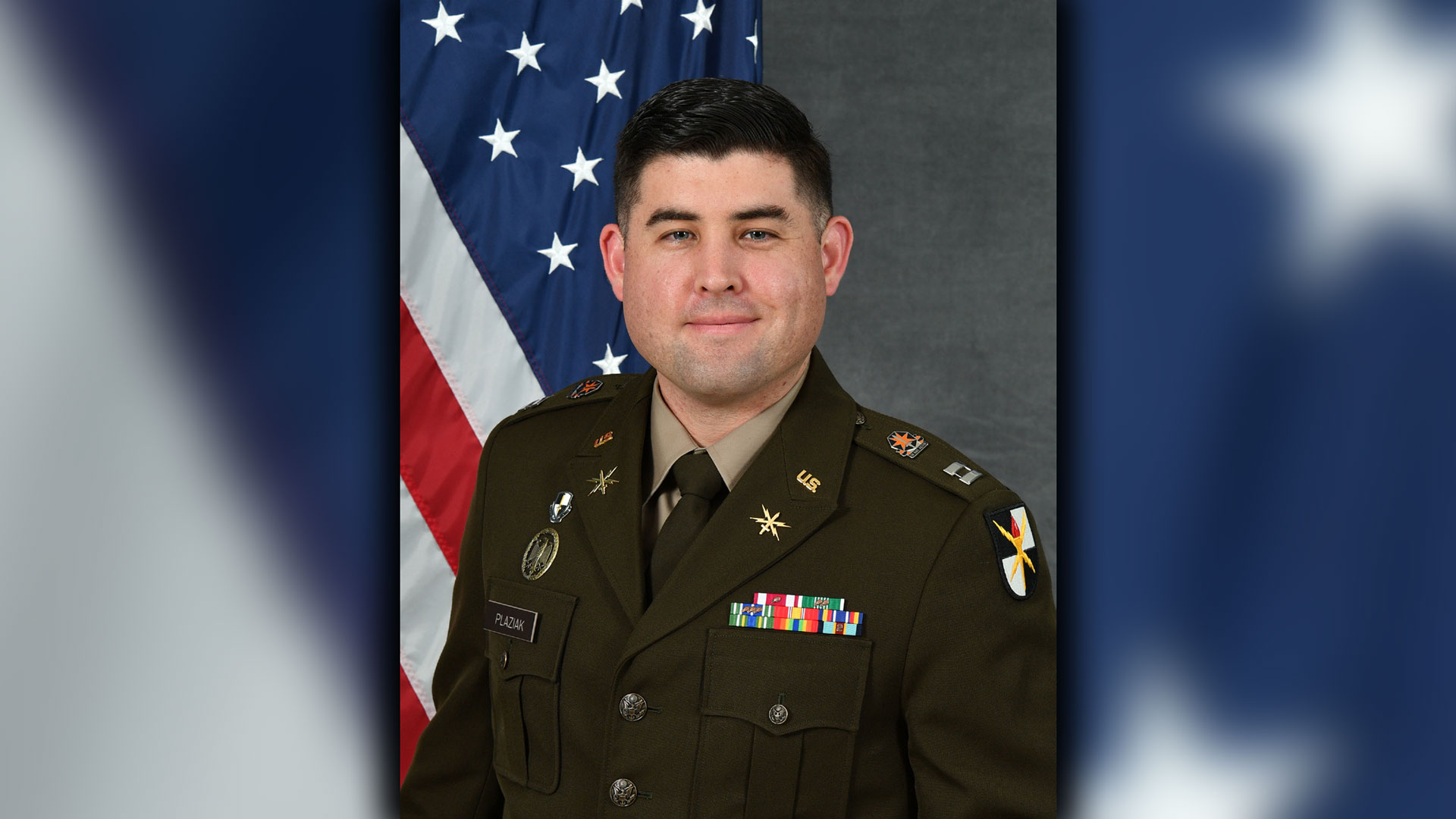
Maj. John Plaziak, U.S. Army Command, General Staff College
Four countries, thirty-seven attacks, and thousands
of lives lost. This was the devastating toll
of the Islamic State in Iraq and Syria’s (ISIS)
global campaign of terror following their 2014
capture of Mosul, Iraq’s second-largest city. As
the extremist group transformed the ancient metropolis
into their self-proclaimed capital, they unleashed
a wave of violence that would soon force
military strategists to reimagine modern warfare.
Online propaganda ran rampant. ISIS, through
the Cyber Caliphate, began recruiting and messaging
their cause through social media and dark
web forums. Military operations needed to expand
from the physical into the digital realm. The
increasing cyber threat led to the formation of
Joint Task Force ARES, a unit within U.S. Cyber
Command, tasked with conducting Operation
Glowing Symphony in 2016.
The mission aimed to disrupt ISIS’s digital
infrastructure by infiltrating and compromising
its media networks. Cyber operatives targeted
ISIS’s servers, websites, and social media accounts,
effectively impeding their ability to spread
propaganda and coordinate activities. This cyber
offensive significantly degraded ISIS’s online
presence, hindering its recruitment efforts and
operational planning.
Operation Glowing Symphony marked a pivotal
shift in modern warfare, highlighting the importance
of cyber operations in combating extremist
groups. By targeting the digital platforms that facilitated
ISIS’s growth, the operation showcased
the potential of cyber strategies to undermine the
capabilities of such organizations.1
Analysis of OGS Through Strategy
A significant theme throughout OGS is the
herculean task of understanding the parts and
interconnected nature of the ISIS media network.
Through Joint Intelligence Preparation of the
Operational Environment, USCYBERCOM teams
could “map out” this network of people, places,
physical infrastructure, logical links, and information.
The resulting web of information seemed
complex. The cause-and-effect analysis placed
on different parts of the network map was difficult
to understand, thus making it difficult to prescribe
action against them. However, through careful
analysis, a captain on a cyber mission team was
able to identify patterns in the network map.
Through these patterns, he began center of gravity
analysis, an analysis of the source of strengths
of the ISIS media network. He discovered critical
capabilities, critical requirements, and critical
vulnerabilities of the ISIS media network (Joint
Staff, 2024, pp. IV-22 to IV-27). These critical vulnerabilities
could be targeted to have a measured
effect. He conducted intellectual bracketing by
using a combination of intuition and cognition with
the data, information, and knowledge available
to him, resulting in a deeper understanding of his
problem (McConnell, Mong, & Ptaschek, 2021).
The ISIS media network was, in fact, a complicated
system rather than a complex one. Joint Task Force Ares was created to conduct the operation
against these identified vulnerabilities.
Analysis of OGS Through Tactics
Defeat mechanisms are essential in describing
the desired effect of an offensive operation. Of
the four mechanisms—destroy, dislocate, disintegrate,
and isolate—OGS displayed qualities
associated with destruction and disintegration
(HQDA, 2022, pp. 3-20). It is conceivable that offensive
cyberspace operations could support any
defeat mechanism. Leaders across formations
and branches must communicate their expectations
in this common language to accomplish the
commander’s intent.
In a traditional offensive operation, combat
force ratios favor the defender, giving them a
relative advantage (HQDA, 2023, p. 8-24). In cyberspace,
however, this favor is reversed. In the
military and industry, cyber defenders struggle to
maintain the defensive posture required to keep
an adversary out of their systems and networks.
Due to the relatively low cost of an attack, as opposed
to a traditional military offensive operation,
an offensive cyber operation only needs to be
successful once. The defender, however, must be
successful every time. This concept flips the traditional
framework that military planners use and
should be accounted for when considering offensive
and defensive operations in cyberspace.
OGS planners could then use this analysis when
planning and executing their mission.
Analysis of OGS Through Force Management
The Joint Capabilities Integration and Development
System (JCIDS), a Department of Defense
(DoD) process for identifying capability requirements
and validating solutions, can be used literally
and metaphorically during Operation Glowing
Symphony (USAWC, 2021, pp. 2-14).
From a metaphorical perspective, the Department
of Defense identified a critical gap in its plan
to defeat ISIS. This gap led to a cyberspace line
of effort aimed at combating the Cyber Caliphate
and its associated media networks. Operation
Glowing Symphony was born through this identified
and filled capability gap.
From a literal perspective, JCIDS represents the mechanisms for leaders to identify gaps in the
current cyber capability set through the Doctrine,
Organization, Training, Material, Leadership and
Education, Personnel, and Facilities (DOTMLPF)
lenses. Once the gaps are identified, the force
management system could create the appropriate
material or non-material solution.
Analysis of OGS Through Sustainment
Sustainment provides three things to a commander:
operational reach, freedom of action,
and prolonged endurance (U.S. Joint Chiefs of
Staff, 2023, p. III-26). While sustainment in the
traditional sense provides resources to continue
the fight in an area of operations, cyberspace
operations typically defy those requirements
due to their non-theater requirements, as depicted
during OGS. However, operational contract
support and finance are critical when considering
cyberspace operations writ large.
Operational Contract Support is the process
of obtaining supplies, services, and construction
efforts from civilian sources to support military operations
(HQDA, 2021, p. 1-1). The ability to hire
contractors allows USCYBERCOM to bolster its
capabilities, which it cannot create through force
generation. Contracted support is paramount to
accomplishing cyberspace operations missions.
Similarly, the Army utilizes its Military Personnel,
Army (MPA) funding to provide the Cyber
Assignment Incentive Pay to offset the difference
between military and potential civilian pay. This
pay differential rewards Soldiers fulfilling key, critical
cyber work roles within the Army (ARCYBER,
2024).
Analysis of OGS Through Leadership
Leadership is paramount across the military,
and cyberspace operations are no different. A
mission commander on the OGS team described
how he identified the vulnerabilities in the ISIS
media network. As a captain, he was able to use
influence techniques centered around his expertise
to convince his supervisor that this idea was
feasible. The pair then convinced senior military
leadership across USCYBERCOM that their plan
was viable, ultimately resulting in OGS itself.
They demonstrate high emotional intelligence,
the ability to influence beyond positional power and organizational trust, a willingness of senior
leaders to trust their subordinates, and their
subordinates’ willingness to come forward with
ideas throughout USCYBERCOM and the OGS
team. Their eventual approval reflected the organization’s
commitment to fostering initiative and
trust. This culture was further validated during the
mission’s execution when an intelligence analyst
provided a mission-critical response to an unforeseen
threat. This action demonstrated the operational
advantages of a command climate that
values subordinate input, empowering leaders to
remain agile under unpredictable conditions.
Analysis of OGS Through History
While it may seem unusual to consider cyberspace
operations in a historical context due to
their recent invention, history provides ways to
compare the importance of events, thoughts, and
actions over time.
During World War I, aircraft were primarily
used for reconnaissance and surveillance (Muller,
1996, pp. 152–154). Towards the end, however,
weapons were attached to the aircraft, and a new
domain of warfare began to take shape. OGS
faced a similar evolution. Initially, cyberspace
operations were conducted for purely intelligence
purposes. Worldwide events, namely a terrorist
attack in Paris in 2015, led to the extension of
operations against ISIS. A small “test” operation
precluded OGS.
This “precursor” concept was present in World
War II. Operation Torch allowed U.S. forces to
demonstrate their mettle in combat operations to
the Allies. A successful Operation Torch was the
precursor to Operation Overlord, just as initial
cyber effects operations were the predecessor to
OGS.
Historical military thought is also present in
cyberspace operations. Carl Von Clausewitz’s
“fog of war,” or the uncertainty present in all
military operations, was present during the initial
planning for OGS (Clausewitz, 2006). The fog of
war allowed the ISIS media network to masquerade
itself as a complex system, decreasing the
planning team’s ability to understand its structure.
The fog of war seems omnipresent across all
types of military operations.
Implications for Future Joint and Multinational
Operations
Analyzing OGS through these lenses provides
an opportunity to examine the future.
From the dawn of the internet to the execution
of OGS in 2016, the operation represents a
culmination of all technological and political acceptance
of cyberspace operations and its place
in modern warfare. From the Moonlight Maze to
Stuxnet to OGS operations, we see a change in
political acceptance from total secrecy to modest
public discourse surrounding cyberspace operations.
OGS was inherently joint and multinational but
was still a very strategic capability. As the U.S.
builds partners and allies around the globe, it
may become prudent to create a subset of cyberspace
operations at the tactical level that can be
shared with our multinational partners.
Utilizing the JCIDS process through DOTMLPF,
potential solutions arise through the DOTMLPF
framework. An organizational solution could
be to create a cyberspace operations unit that is
organic to the Corps. These organizations could
use open-source and non-classified tools, tactics,
techniques, and procedures at the operational
and tactical levels. These Corps-level assets
could then operate in step with Cyber Mission
Force (CMF) capabilities to extend these capabilities’
reach, scope, and availability.
For example, a Cyber Protection Team (CPT)
could deploy to a partner nation in the Indo-Pacific
to assess and analyze critical port infrastructure.
After their operation, the Corps could
deploy its organic cyber unit during routine security
cooperation exercises to provide follow-up
assessments, analysis, and partner training that
builds on the CPT’s original work. This redundancy
would increase the number of touchpoints with
our partner force while supporting potential U.S.
interests in port operations in the Indo-Pacific.
In short, the CMF would maintain its strategic
capability set while cyber units across the force
could leverage non-classified tools to extend the
capabilities and incorporate more multinational
partners. Cyberspace operations are also helpful when
creating and exploiting information advantages
in support of decision dominance and imposing
multiple dilemmas on the enemy, two imperatives
of MDO. The Army has traditionally been excellent
at integrating land, sea, and air across all
levels of warfare, while cyberspace and space
operations have traditionally lived in the strategic.
Through critical and creative thinking and technological
adaptation and innovation, there are ways
to integrate cyberspace operations into the operational
and tactical levels.
Conclusion
The pace of technology is increasing. While
OGS represents a culmination of all development
to that point in time, it also represents a springboard
into the future. Leaders’ ability to analyze
future possibilities is paramount to ensuring that
the United States is at the forefront of technological
solutions. This involves adapting these solutions
across all levels of warfare while incorporating
our multinational partners.
The analysis of Operation Glowing Symphony
through these lenses underscores the need for
military leaders to think critically and creatively
about the evolving nature of warfare in the digital
age. We understand the challenges and opportunities
ahead by examining the operation’s implications
for strategy, tactics, force management,
sustainment, leadership, and history. As we strive
to integrate cyberspace operations into the operational
and tactical levels of warfare, we must
remain adaptable, innovative, and committed to
developing and integrating cyberspace operations
and education for leaders across the Army.
Notes
1. For detailed information surrounding the events of OGS, the author recommends a podcast episode (https://darknetdiaries.com/episode/50/) and an article (https://www.npr.org/2019/09/26/763545811/how-the-u-s-hacked-isis).
References
Army Cyber Command (2024). Cyber Assignment Incentive Pay. https://www.arcyber.army.mil/Resources/Fact-Sheets/Article/3737184/cyber-assignment-incentive-pay/
BBC. (2013, October 27). US bugged Merkel’s phone from 2022 until 2013, report claims. BBC News.
https://www.bbc.com/news/world-europe-24690055
Clausewitz, C. (1832). On War. (2021). Project Gutenberg. https://www.gutenberg.org/files/1946/1946-h/1946-h.htm#chap07
FBI. (2018, July 13). Russian Interference on 2016 U.S. Elections. https://www.fbi.gov/wanted/cyber/russian-interference-in-2016-u-s-elections
Forno, R. (2024, December 6). What is Salt Typhoon? A security expert explains the Chinese hackers
and their attack on US telecommunications networks. UMBC. https://umbc.edu/stories/what-issalt-typhoon-a-security-expert-explains-the-chinese-hackers-and-their-attack-on-us-telecommunications-networks/
Headquarters, Department of the Army (2021). ATP 4-10 Multi-Service Tactics, Techniques, and Procedures
for Operational Contract Support, 1-1. HQDA.
Headquarters, Department of the Army (2022). FM 3-0 Operations, 3-20. HQDA.
Headquarters, Department of the Army (2023). FM 3-90 Tactics, 8-24. HQDA.
House Foreign Affairs Committee. (2020, February). Egregious Cases of Chinese Theft of American
Intellectual Property. https://foreignaffairs.house.gov/wp-content/uploads/2020/02/Egregious-
Cases-of-Chinese-Theft-of-American-Intellectual-Property.pdf
McConnel, R. A., Mong, J.A., & Ptaschek, D. (2021). Seeing Through the Fog Developing Fog of War
Resistant Visualization. The Military Review. https://www.armyupress.army.mil/Journals/Military-
Review/English-Edition-Archives/January-February-2021/McConnell-Fog-of-War/
Melody, P. (2021). How the Army Runs A Senior Leader Reference Book. U.S. Army War College,
2-14. https://usawc-ssi-media.s3.us-east-1.amazonaws.com/pubs/2021-2022_HTAR.pdf
Muller, R. (1996). Close Air Support: The British, American, and German experiences, 1918-1941. In
W. Murray & A.R. Millet (Eds.), Military Innovation in the Interwar Period (pp. 152–154). Cambridge
University Press.
U.S. Joint Chiefs of Staff (2023). Joint Publication 1, Volume 1, Joint Warfighting, III-2. JCS.
U.S. Joint Chiefs of Staff (2024). Joint Publication 5-0, Joint Planning, IV-22 to IV-27. JCS.
Author
Maj. John Plaziak, U.S. Army Command, General Staff College.