Opening the Vaults
Treasures of the Fort Liberty Museums
By Jimmie Hallis
Article published on: August 1, 2024 in the Army History Fall 2024 issue
Read Time: < 3 mins

A view of the Opening the Vaults exhibit room
The closing scene of the frst Indiana Jones movie, Raiders of the Lost Ark (1981), shows the Ark of the Covenant
crated up and being delivered to the back of a long, dark warehouse full of other wooden crates, never to be seen
again. Sometimes, people think this is what happens to artifacts in museums. However, if you are at Fort Liberty,
North Carolina, the opposite of this scene recently occurred, and it is bringing in museum lovers from all around.

Lucasfilm LTD/Disney
A new exhibit called “Opening the Vaults” recently debuted at the U.S. Army Airborne and Special Operations Museum
(ASOM) in Fayetteville, North Carolina. It is a collaborative effort by three museums and one historical holding.
ASOM, the John F. Kennedy Special Warfare Museum, the 82d Airborne Division War Memorial Museum, and the History
Office of the U.S. Army Reserve Command all worked together to create the exhibit, which will run through December
2024.
Exhibits in military museums often revolve around a battle, special mission, or historical period to tell a story.
“Opening the Vaults” is more like finding the Ark of the Covenant on display. Each organization participating in the
exhibit contributed rare and never-before-seen artifacts for the public to view in one place. Each piece has its own
unique history or story to tell. The temporary exhibit gallery has seventy select artifacts on display, along with
sixteen informational panels highlighting historical information from each museum’s mission. From the Civil War to
the current combat raging in Ukraine, there is something for everyone to discover. The exhibit even has an
educational Seek and Learn activity for kids to do, as they go from case to case reading artifact labels and
learning about U.S. Army history. In this educational activity, visitors can spoil the intentions of an expert
artifact thief, Overlord.

The entrance to the "Opening the Vaults" exhibit
Without giving too much away, some of the artifacts include an Office of Strategic Services Welrod pistol, a
special forces extraction suit from Vietnam, World War I–era musical instruments, and a message carried by a pigeon
during World War I. Perhaps one of the most unique artifacts, from the John F. Kennedy Special Warfare Museum, has
the apt name of the “Unknown Artifact.” Museum director Roxanne M. Merritt says she and her staff have never been
able to figure out what this artifact it is or what it does. They created a QR code for visitors to scan and submit
their guesses as to what they think the Unknown Artifact is. Hopefully, before the exhibit comes down, the museum
will have an answer.
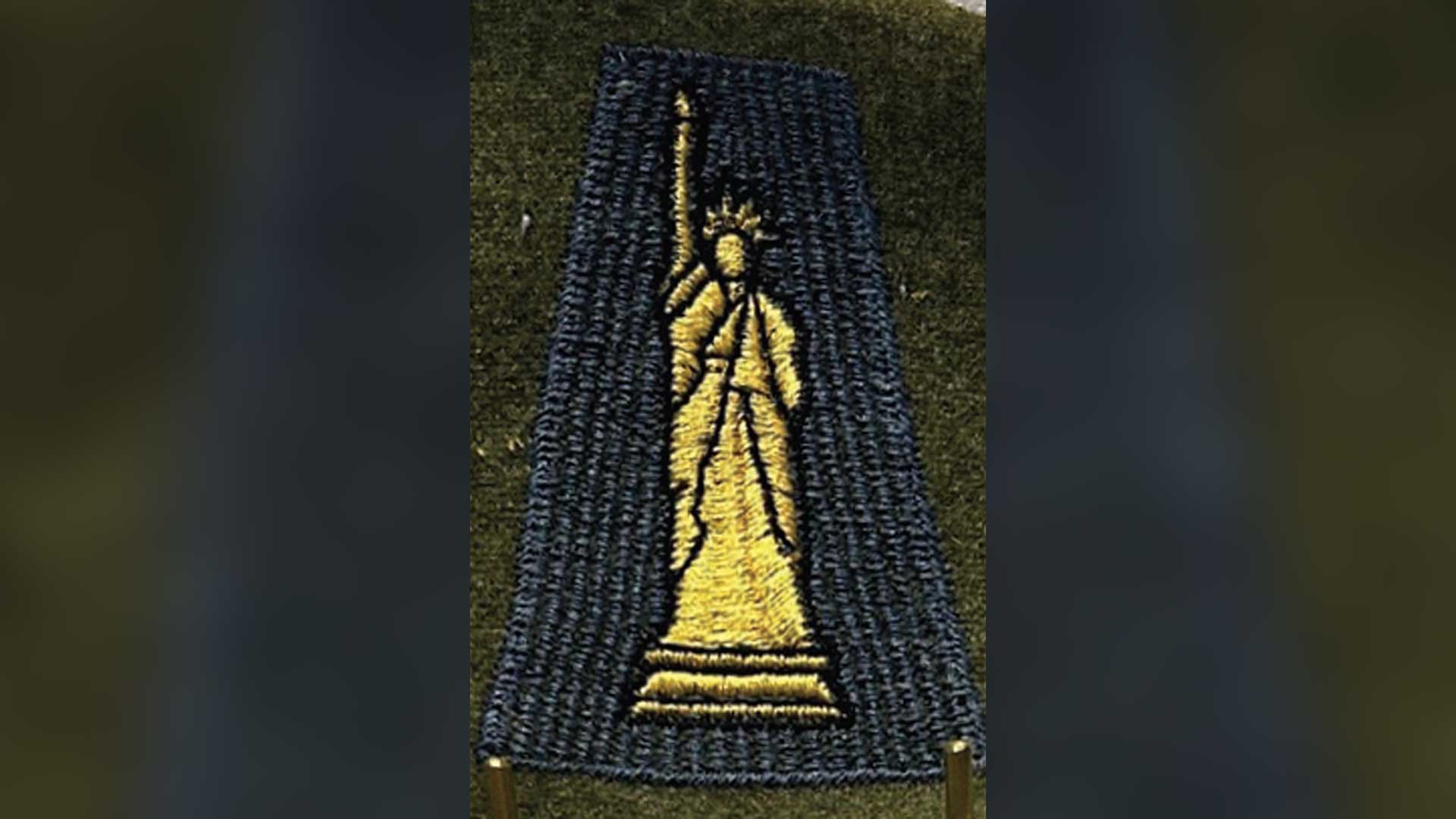
A World War I–era 77th Division shoulder sleeve insignia

A Fort Bragg garrison patch, ca. 1942
Of course, you cannot have a vault filled with rare artifacts and a thief on the loose without the presence of
Military Police (MP) officers. The ASOM staff approached the 503d Military Police Battalion (Airborne) on Fort
Liberty for help. As visitors enter the exhibit, figures of two MPs from the only airborne MP battalion in the U.S.
Army stand guard over the vault’s entrance. The battalion’s command team was excited for the unit to help dress
their representative mannequins with the appropriate gear.
The idea for this exhibit came from an ASOM staff member, but it could not have happened without all the museums
coming on board with the project. Planning began in late 2023, and final installation occurred just before the
exhibit’s opening night. For the Fort Liberty museums, this is a chance to showcase parts of their collections, and
it should not be missed. The museums’ goal is to host another version of the exhibition at a future date. Those who
miss seeing this one can follow the museums on social media to learn more about when they will launch the next one.
For more information, including location and hours of operation, visit the ASOM website at https://www.asomf.org.

An Italian parachute container, ca. 1916

An M-209A Mechanical Cipher Machine

A candelabra made from Civil War bayonets

A .32-caliber Welrod pistol

A World War I–era M1917 helmet from the 307th Engineer Battalion, 82d Division
Author
Jimmie Hallis is a museum curator at the U.S. Army Airborne and Special Operations Museum.